
Just a heads up: Some of the links on this page are affiliate links, meaning I may earn a commission if you book through them (at no extra cost to you). Your support helps me keep Rachel IRL going, so thank you! To read more, please see my affiliate disclosure.
Last updated September 2026.
I regularly update my guides to keep them current and genuinely useful!
The Old Quarter in Hanoi was such a pleasant surprise.
Most of the time when I’m visiting a new city, I practically have to brace myself before heading into the “old town.” In Europe, this is usually where you’ll find the tourist traps, overpriced souvenir shops, and rowdy hostel bars that feel completely disconnected from the actual city.
So on my first trip to Southeast Asia, I wasn’t expecting much. But the Hanoi Old Quarter completely proved me wrong.
Instead of feeling overly curated for tourists, it felt full of life. From the minute we got dropped off at our hotel (and nearly got taken out by a speeding scooter) I knew I wanted to drop our bags and get right back out there to explore.
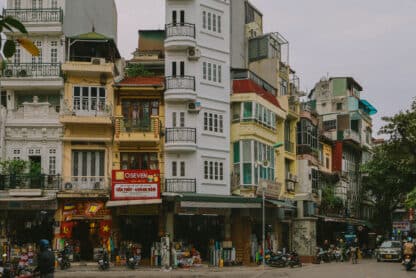
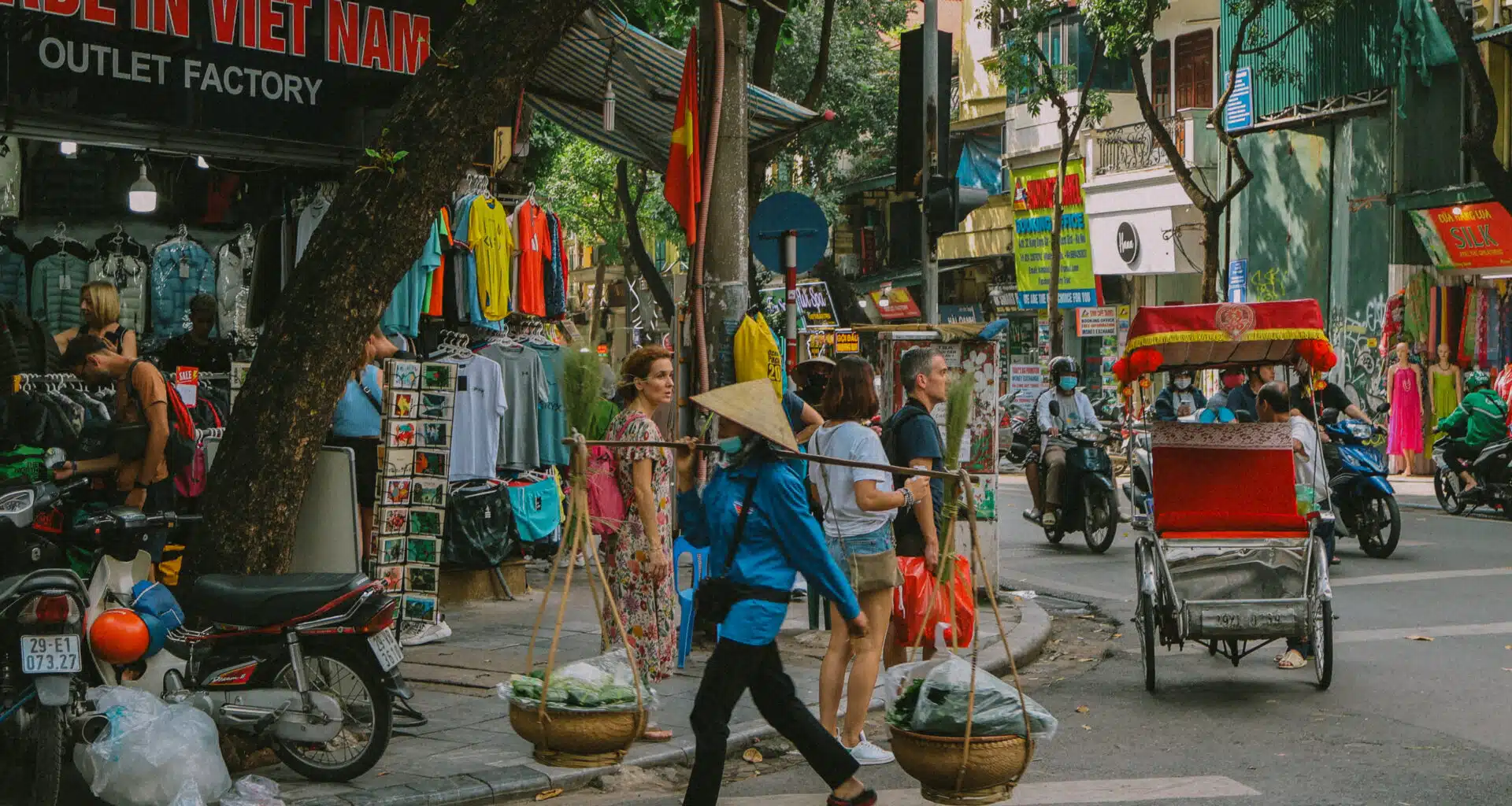
The Old Quarter is busy, chaotic, a little overwhelming at times, but still feels genuinely local, which makes it very special. Yes, in some places it’s definitely gentrified, but it still holds onto the character that makes it one of the most interesting parts of Hanoi.
We ended up spending far more time here than we originally expected, and not once did I regret choosing to stay in the Old Quarter.
In this guide, I’ll walk you through how to explore Hanoi’s Old Quarter, including the best things to do, where to eat and drink, and how to experience it in a way that makes you feel like a local.
Plus, if you’re planning a full Hanoi itinerary check out all the Hanoi archives, and for a larger Vietnam trip, check out my Vietnam posts.


Delve into Vietnam
Don’t forget to check out the rest of my Vietnam posts and guides if you’re still planning your perfect trip!
Things to Do in Hanoi’s Old Quarter
Real Talk:
Vietnam—like so many parts of Southeast Asia—is feeling the pressure of overtourism. And while I want to believe that if you’re here on my blog, you’re the kind of traveler who cares about leaving places better than you found them… I still have to say it:
Don’t be an asshole when you travel. Not in Vietnam, not in Southeast Asia, not anywhere.
I’ve seen too many visitors treat locals like background characters or behave like the region exists solely for their vacation. So here’s your friendly-but-firm reminder:
If you’re going to make locals’ lives harder, just stay home.
1. Wander First, Figure It Out Later
Ok, return readers—you know the drill.
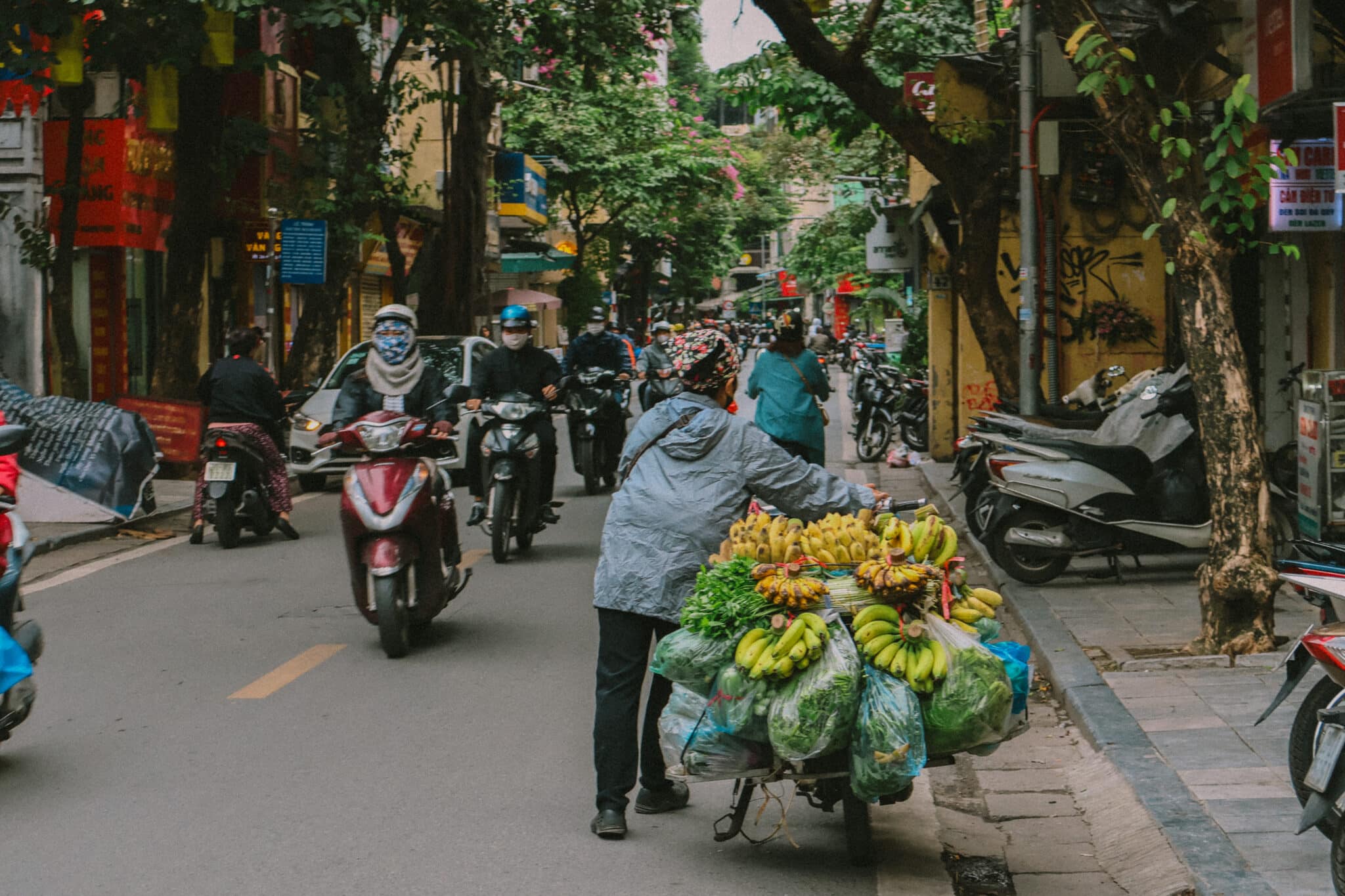
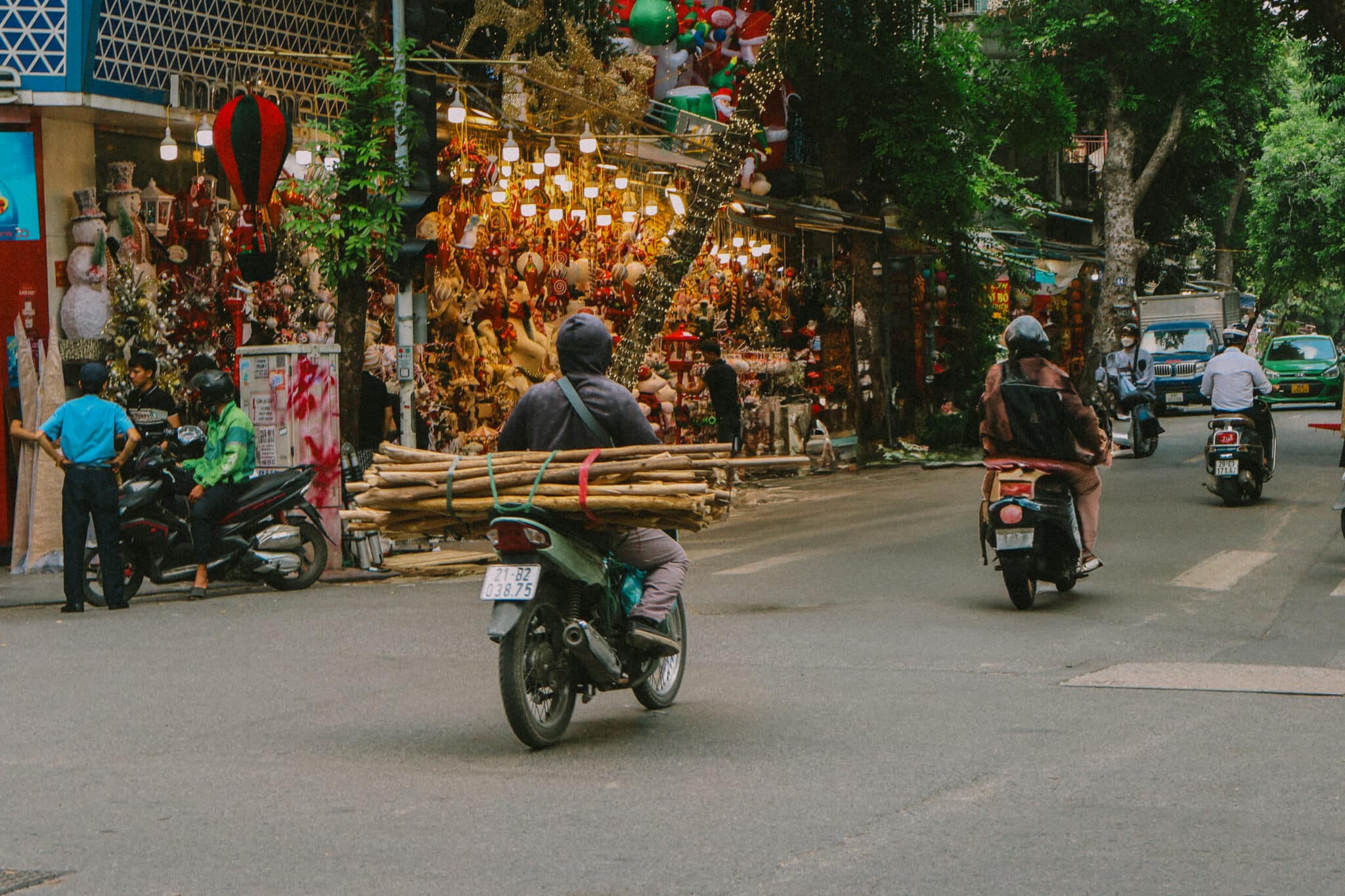
There is no greater gift you can give yourself while traveling than the art of the wander. And honestly, there’s no better place to do it than Hanoi’s Old Quarter, where the streets are dense, chaotic, and full of blink-and-you’ll-miss-them moments you won’t find on any blog checklist.
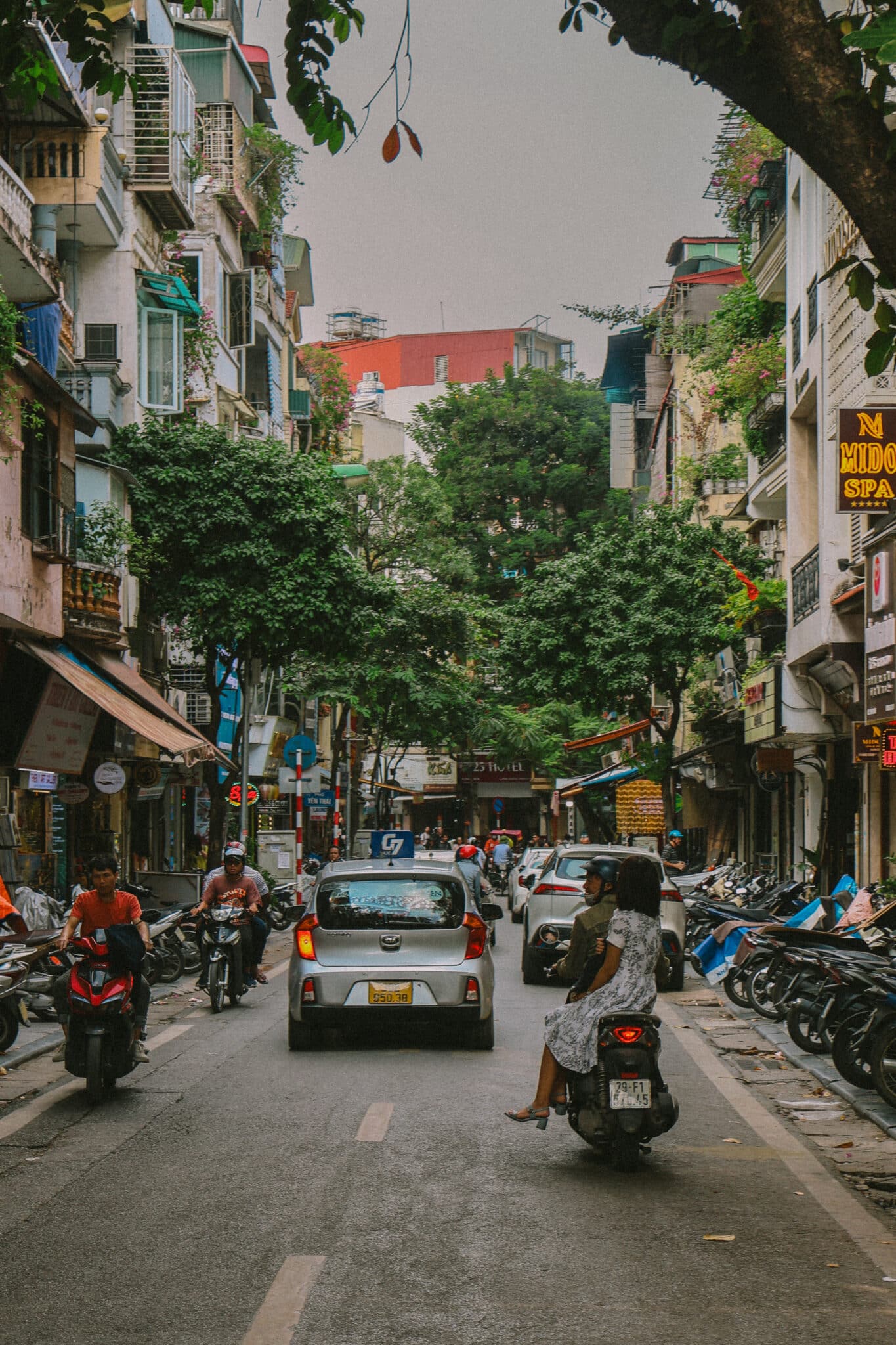
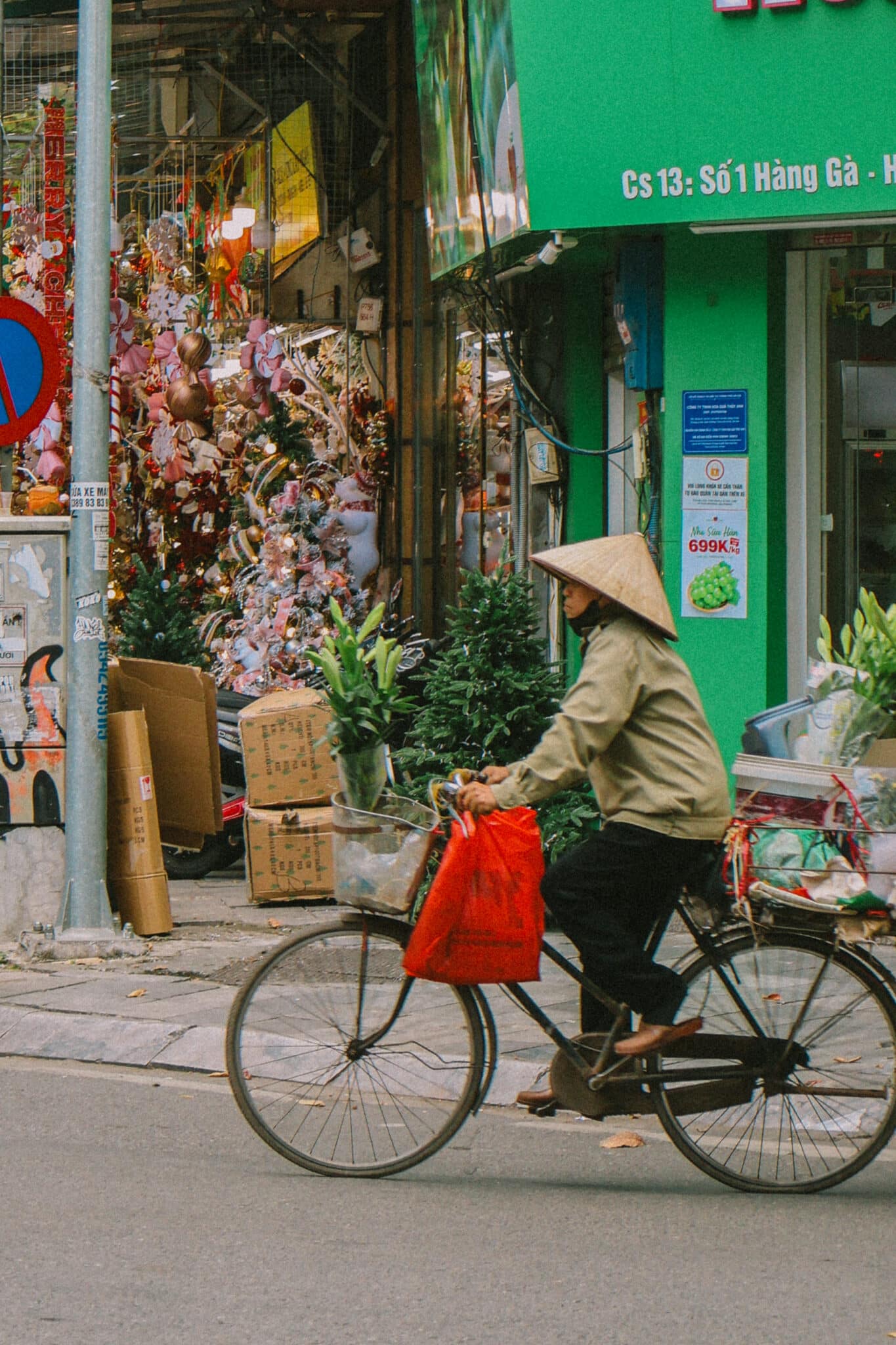
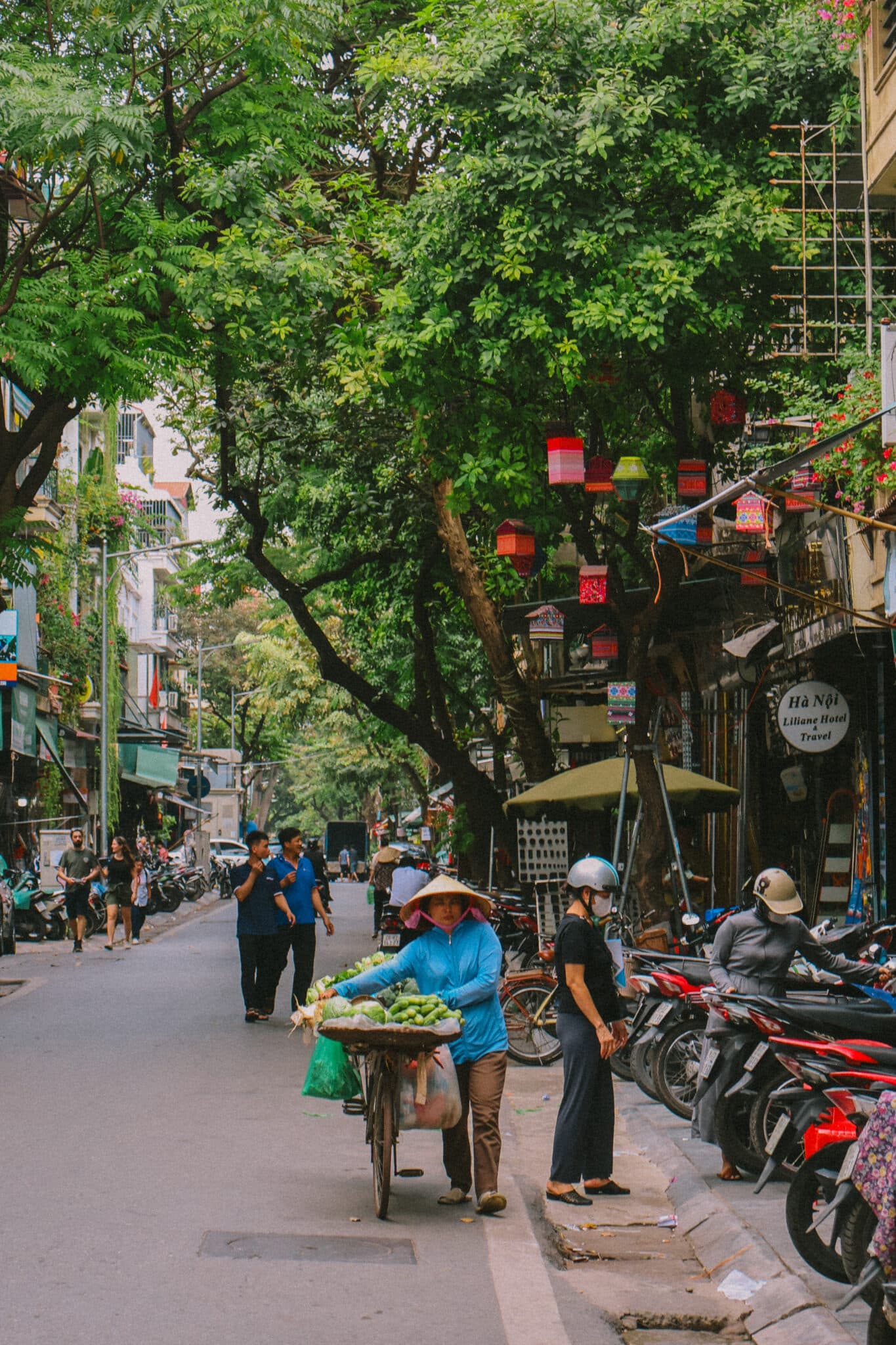
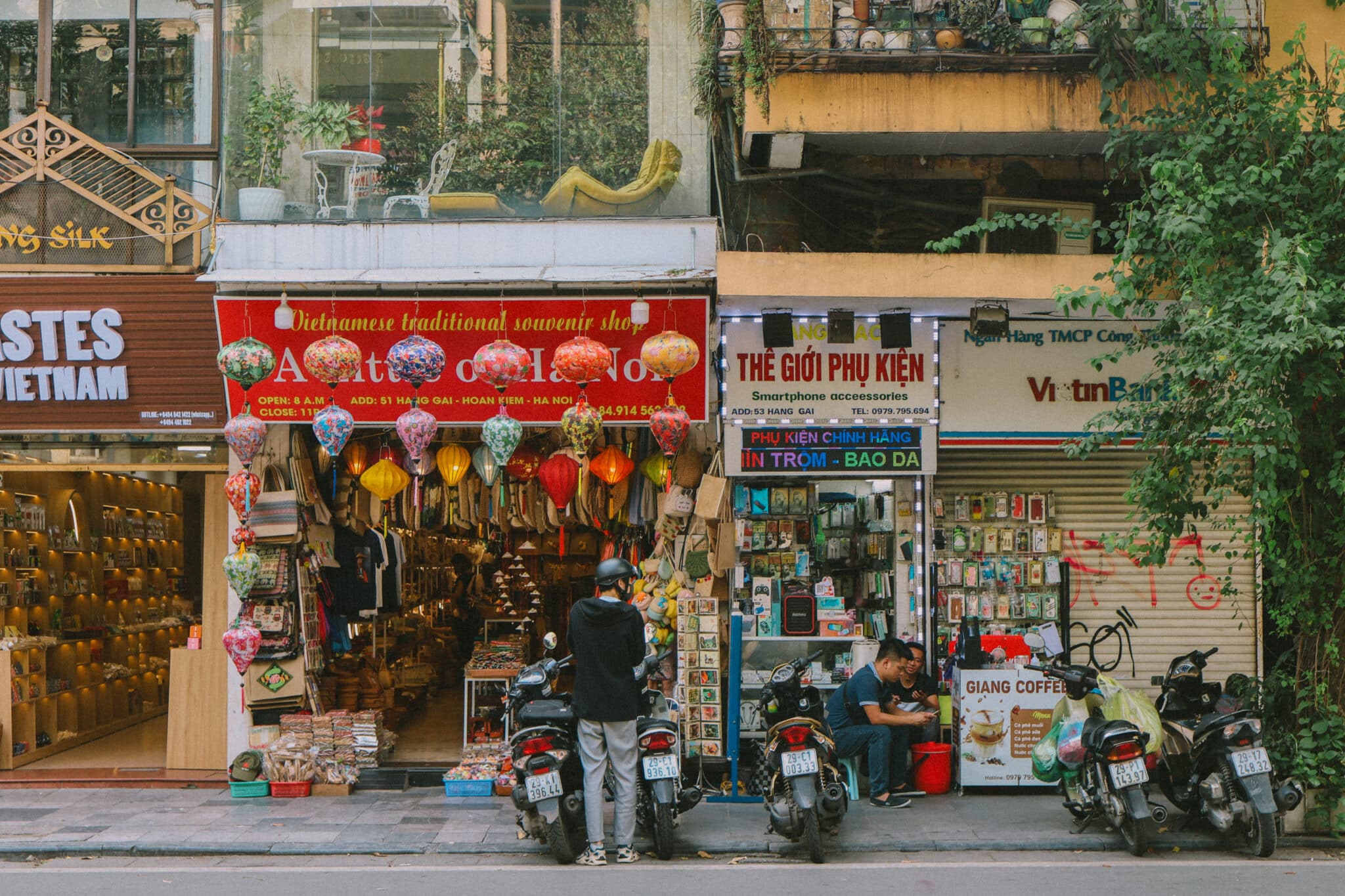
Some of my favorite travel experiences have come from ditching a plan entirely and just seeing what happens.
You get the idea: pop into a shop that catches your eye. Ask the friendly woman serving sticky rice what she would order. Let your intuition lead the way.
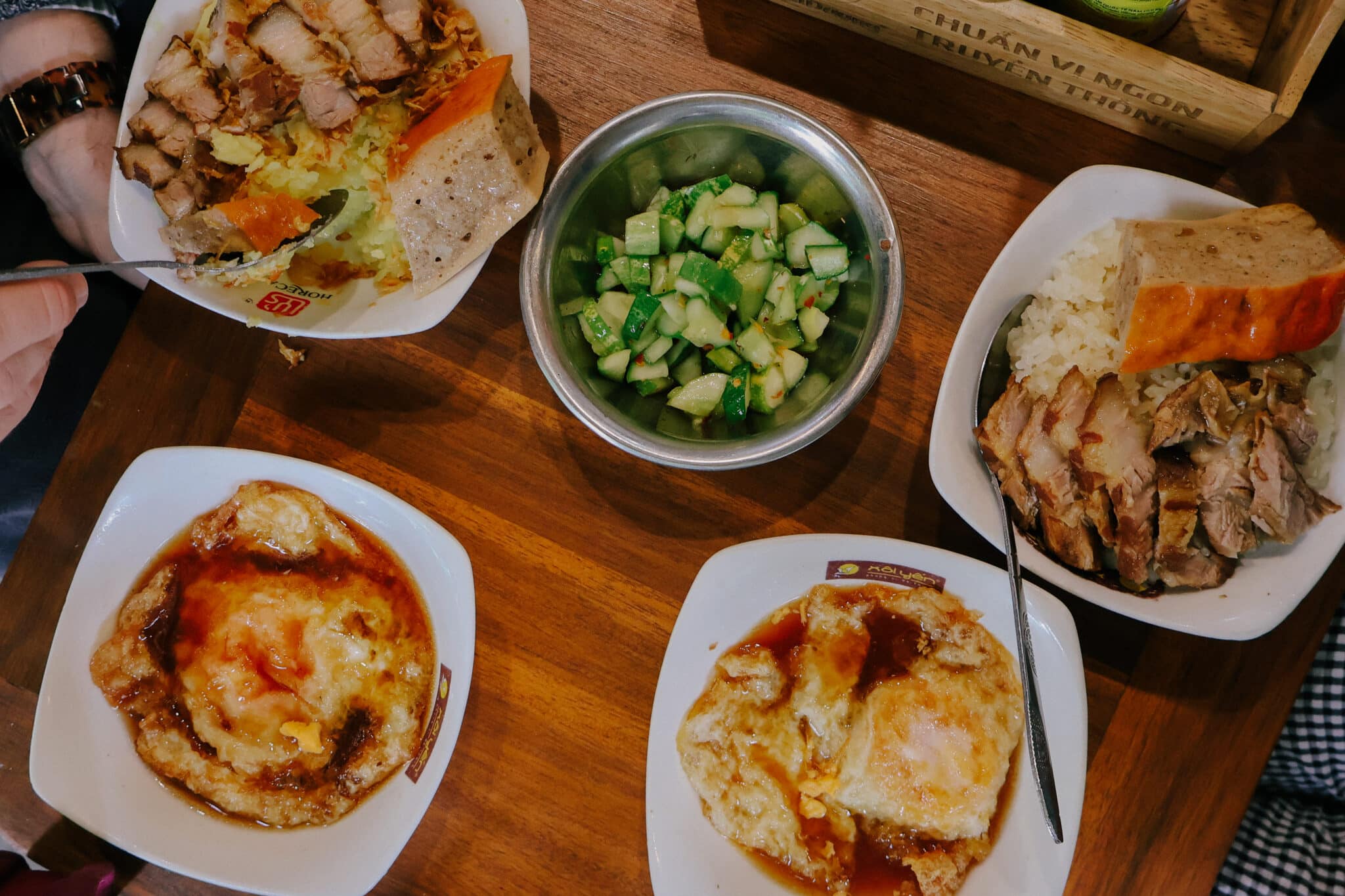
In the Old Quarter, wandering helped us find our new favorite Vietnamese food (xôi) and a vintage jewelry shop we didn’t expect to come across. It was also a lot of fun to happen upon the different guild streets (more on that in a second) without realizing they were around the corner.

Insider Tip
Bonus points if you can do this alone.
Sometimes I’ll split off from whoever I’m traveling with and take a few hours (or even a full day) to wander by myself. I can’t fully explain why, but there’s something about being alone that makes you more open to the experience.
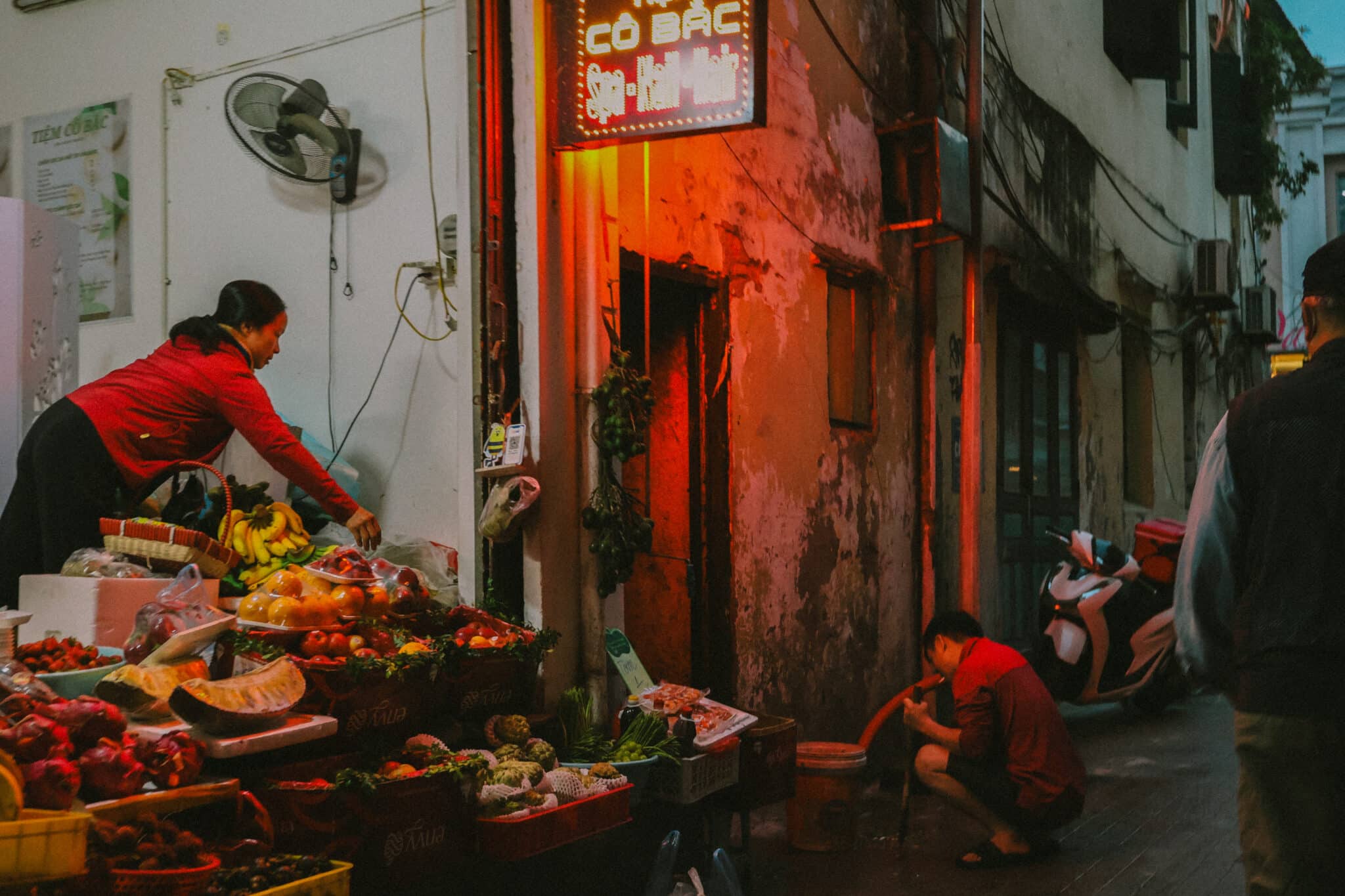
Still Nervous to Get Lost Exploring On Your Own?
👉🏽 Hire a private guide for the day! 👈🏽
It’s the perfect mix of structure and support without feling like you’re part of a huge tour group. This 4.9 star-rated private walking tour of the Old Quarter pairs you with a local who will wander alongside you. You’ll visit all the highlights, but also have the freedom and flexibility to follow your senses.
2. Keep an Eye Out for the 36 Guild Streets
The Old Quarter evolved out of a working neighborhood, where each street was historically dedicated to a specific trade. And they still are, for the most part! Silversmiths on one street, silk merchants on another, bamboo goods somewhere else.
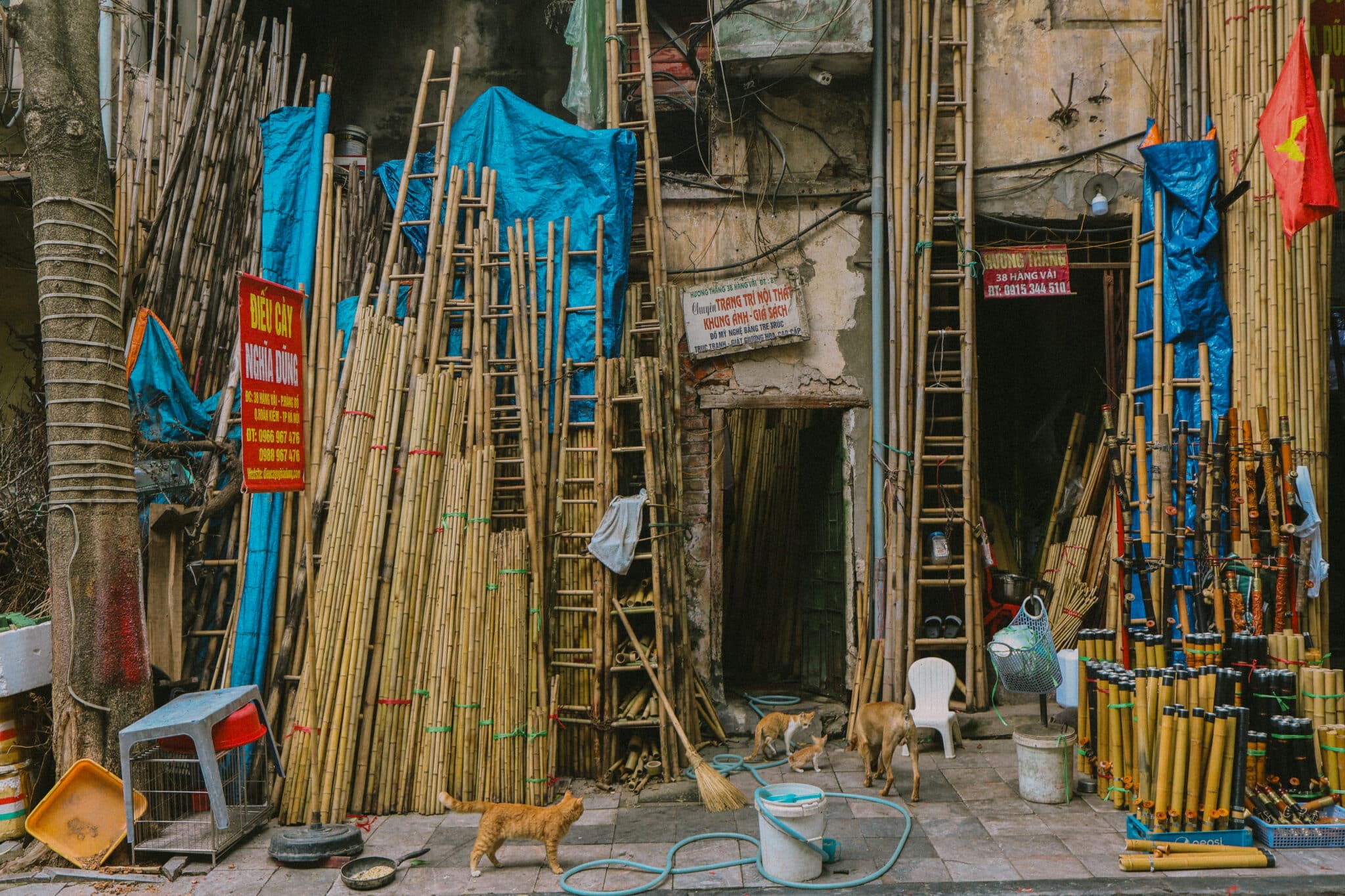
I definitely didn’t memorize all the streets and their dedicated wares before going, and found that it was really fun to try to guess what each street was all about. Often it wasn’t obvious!
Today, the Old Quarter is much more eclectic—cafes, boutiques, street food, and souvenir shops are all layered on top of that original maze. Given that, I did find that doing a little research on what to keep an eye out for added a layer of context to what might otherwise have just felt like a maze of trade streets.
Here are some of my favorites:
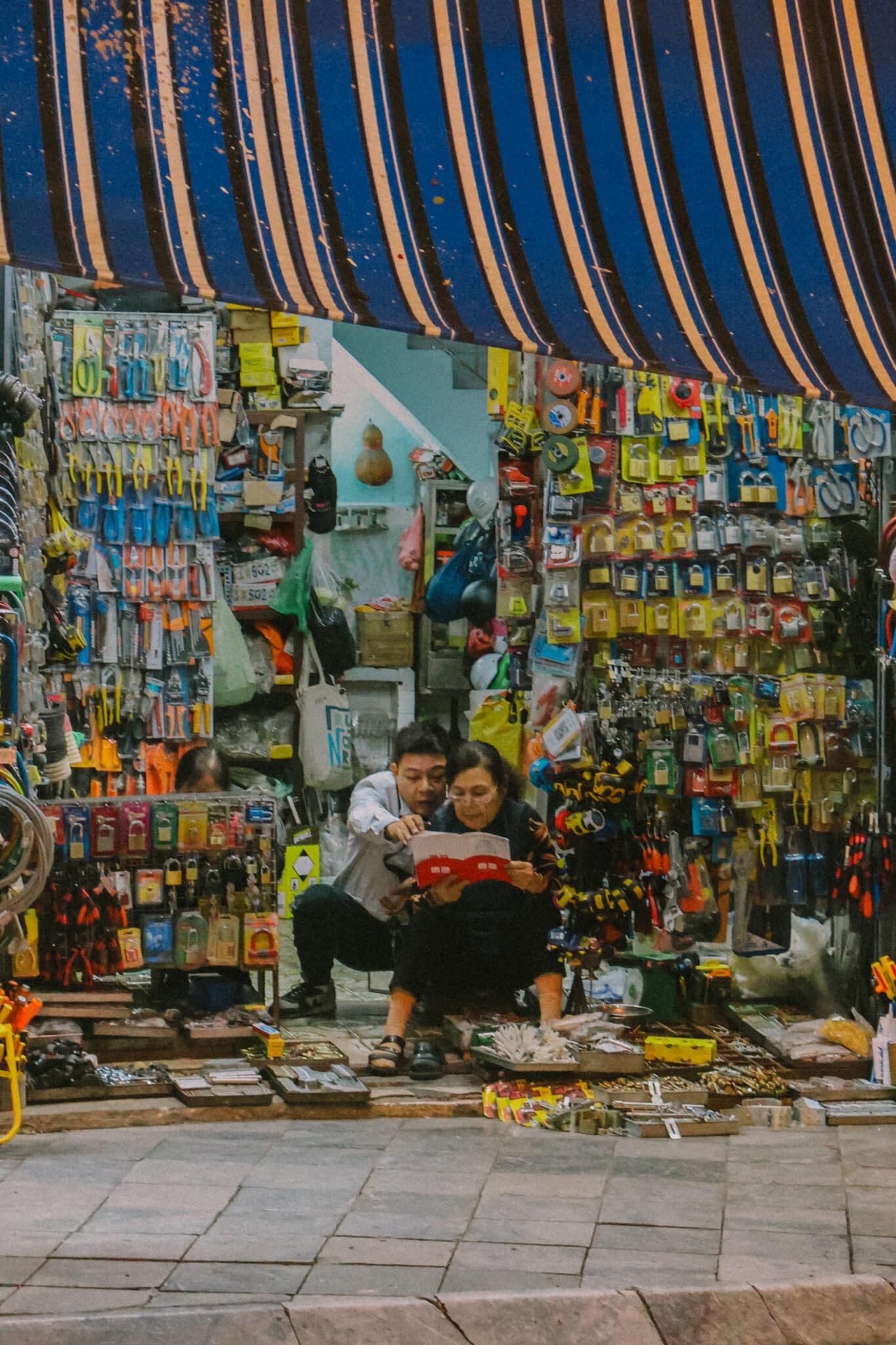
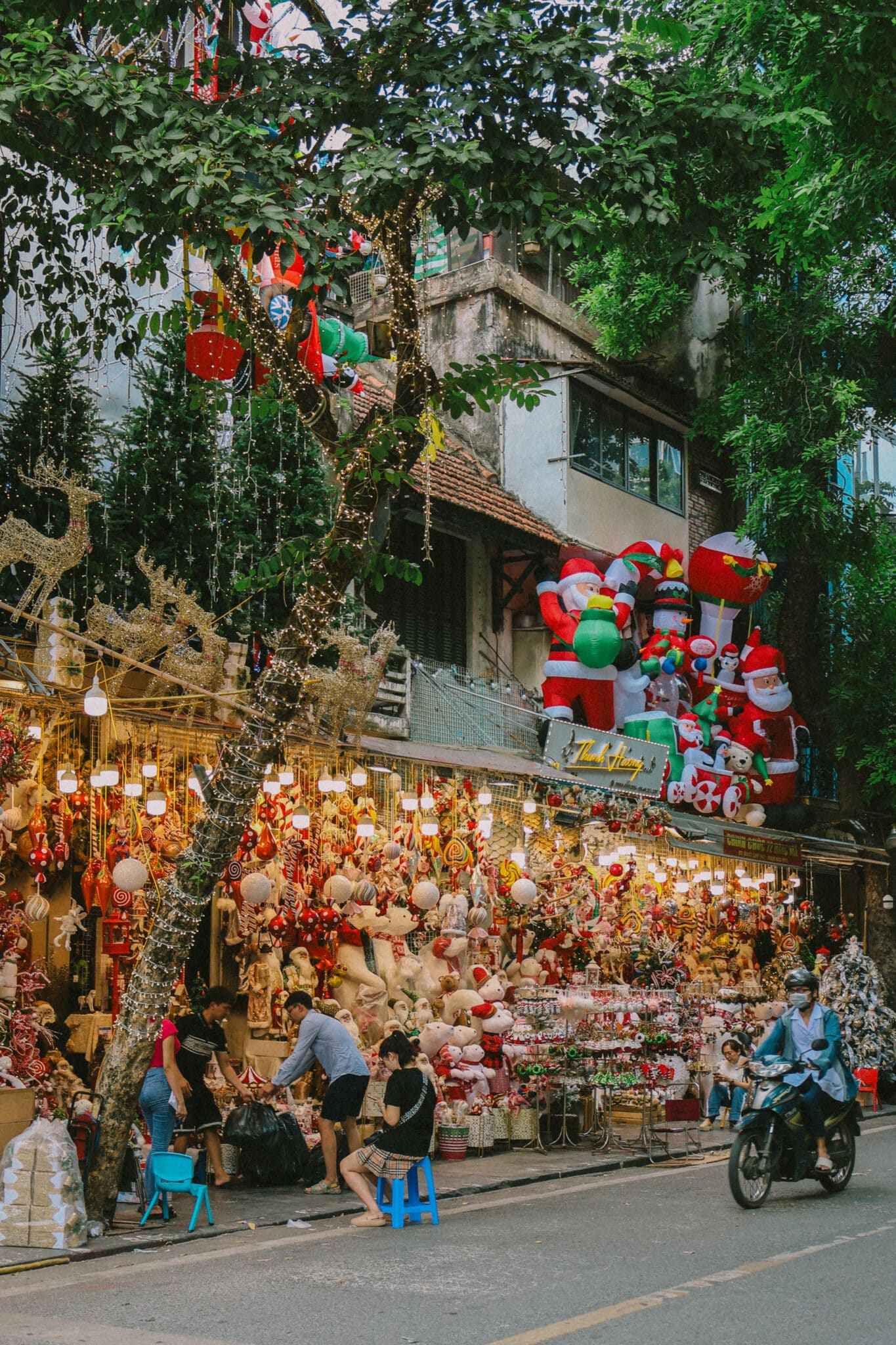
You probably don’t need to go out of your way to see all 36 streets, (though I’ll be honest, I kind of tried to), but it’s worth keeping an eye out for a few of the more interesting ones as you move through the Old Quarter.

Did You Know
“Hang” roughly translates to “wares” or “merchandise,” so that’s why you’ll notice so many street names start this word. It’s a nod to what was once (or maybe still is) sold there!
In the spirit of the 36 guild streets, I’d also recommend trying to engage a bit with some of these traditional industries yourself! There are all kinds of workshops and classes you can book throughout the Old Quarter, where you’ll have a chance to create a souvenir using traditional techniques.
I didn’t get a chance to do one of these myself in Hanoi, but I always love activities that let me learn a bit about the place and support a local business all at once.

Planning Cheat Sheet: Every Link You Need in One Place
P.S. When you book using my links, you help support Rachel IRL at no extra cost to you. It’s a win-win!


3. Stop by St. Joseph’s Cathedral and Explore the Area
Right in the heart of the Old Quarter, St. Joseph’s Cathedral is hard to miss, especially given how out of place it seems.
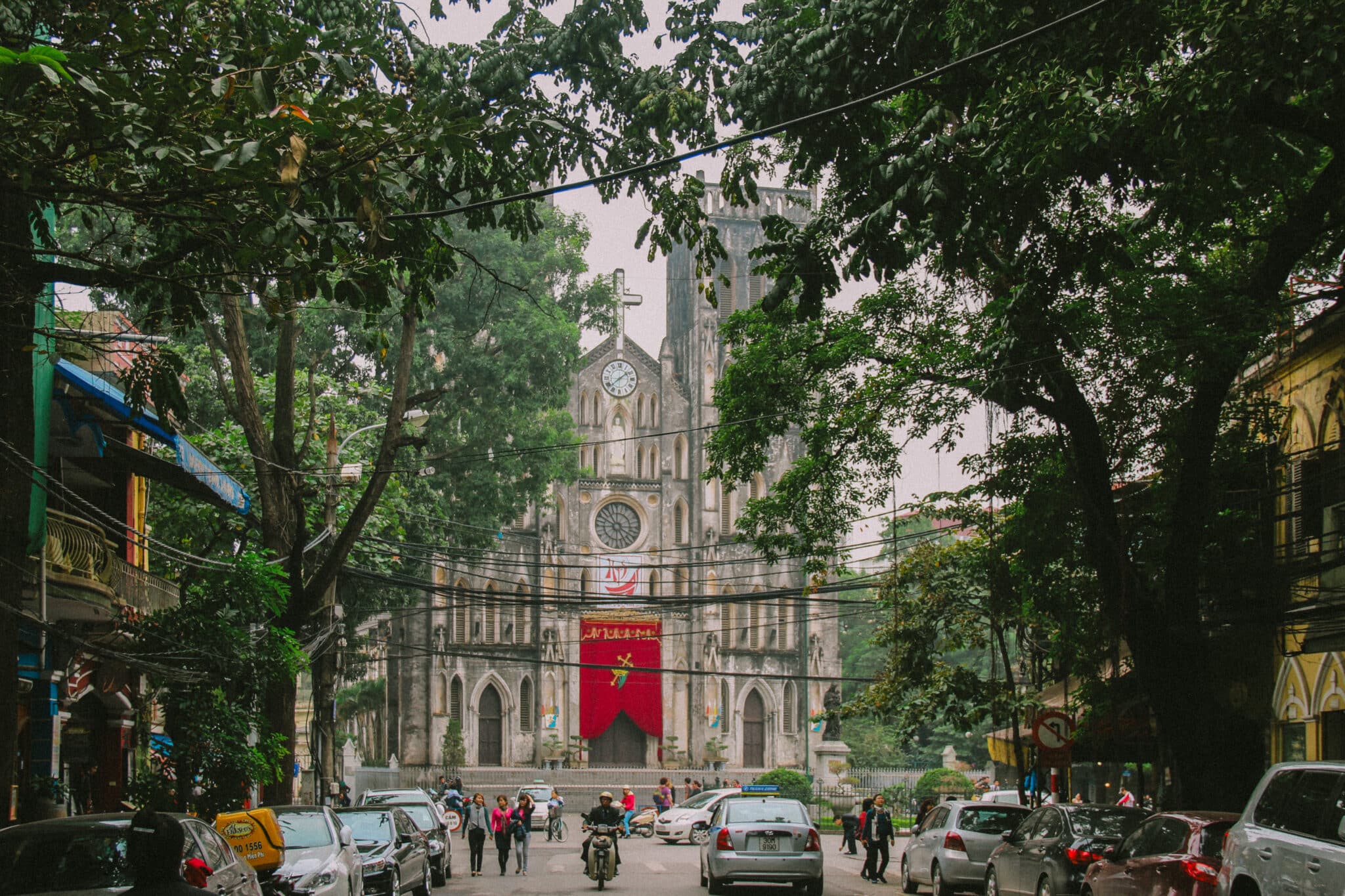
Built in the late 19th century during French colonial rule, it has an obviously (and jarring) European feel that just doesn’t blend in at all with the rest of the neighborhood.
It’s worth a quick stop, but what I liked most was the atmosphere around it: a few of my favorite shops were within walking distance of the cathedral (shopping guide coming soon).
4. Shop the Old Quarter’s Indie Stores and Hidden Gems
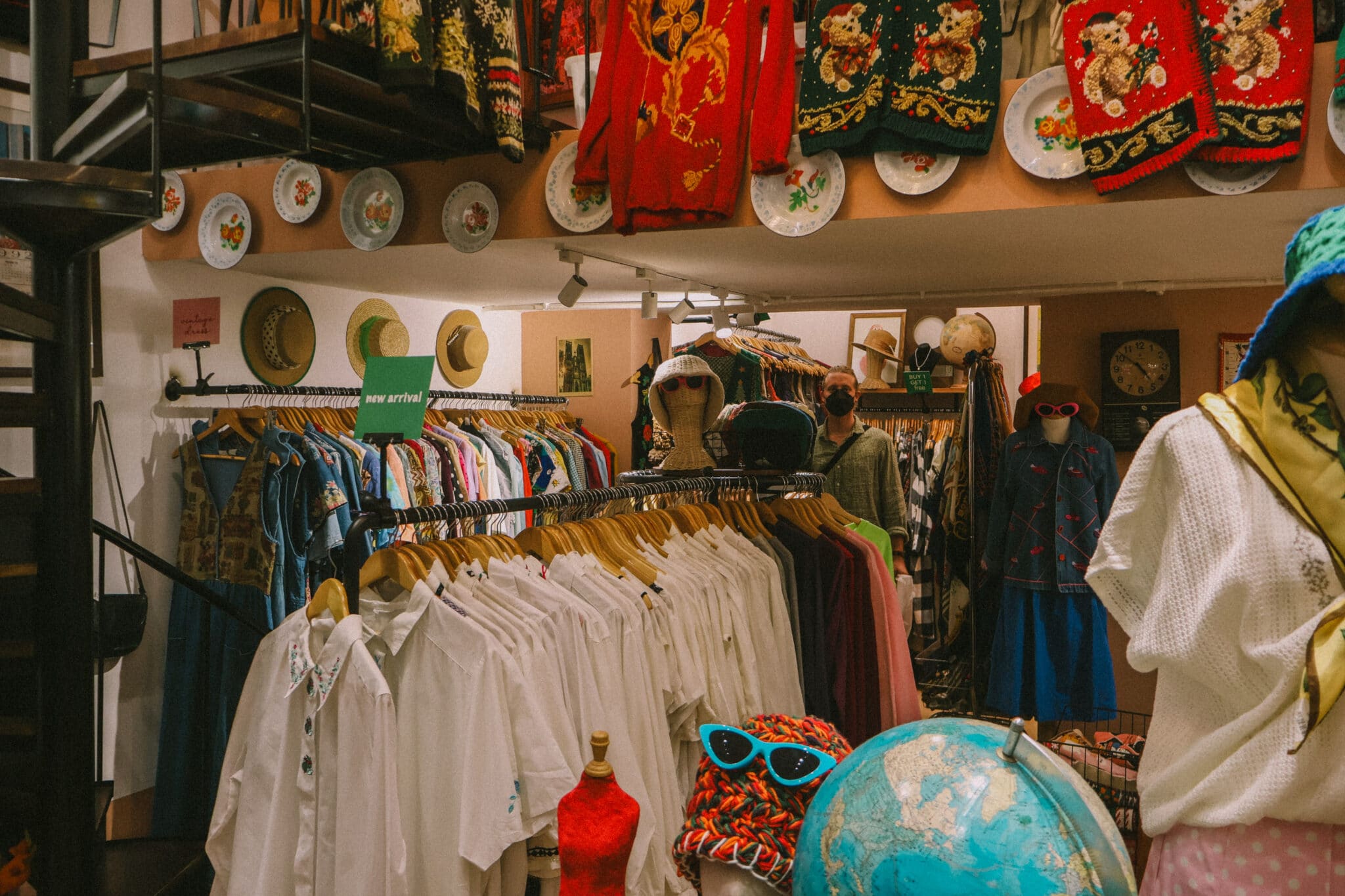
It’s really no secret that I absolutely love to shop while traveling. In my opinion, spending money at a locally owned, independent shop is one of the best ways to benefit the people who live in the destination you’re visiting.
Plus, you get some cool keepsakes, souvenirs and gifts out of it. There are some really cool shops in the Old Quarter—several of my favorite, in fact, that you should definitely check out. Chan Con Cong Vintage was one of the best stocked vintage shops in Hanoi, and Collective Memory had the absolute best souvenirs and local products.
Be sure to check out my full shopping post for the full scoop!
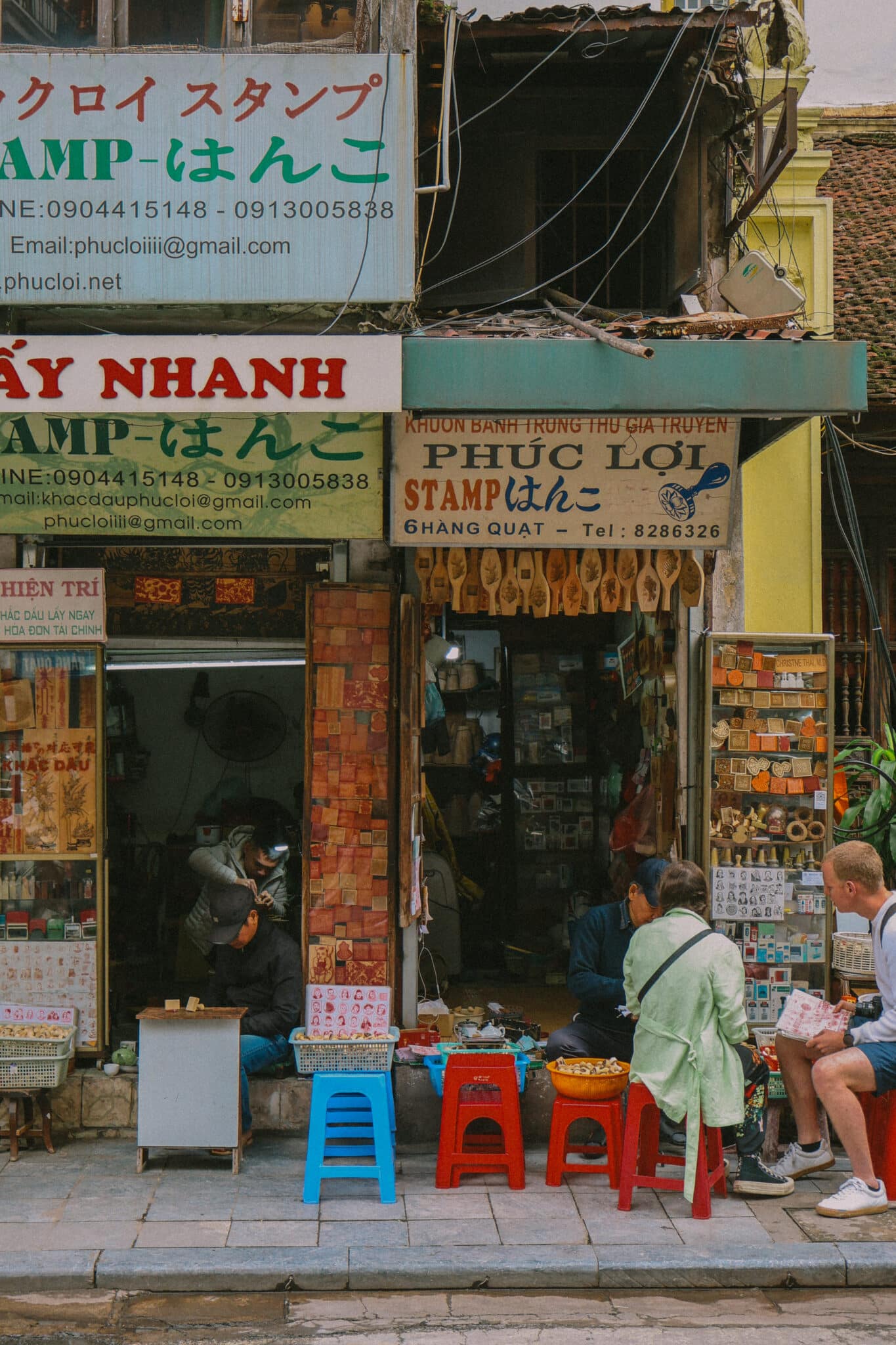
Insider Tip
Want a cool as f*ck souvenir?? You’ve gotta visit this custom stamp guy at Phúc Loi Stamps.
We didn’t spot him until our literal last 10 minutes in Hanoi (like I’m not kidding I took these as we speed-walked back to our hotel to get picked up to leave) and I’ve spent genuinely every day since then regretting the fact that I didn’t have time to get a custom stamp. LEARN FROM MY MISTAKES!!!!
5. Step Inside the Ma May Ancient House
If you want a quick window into what life in the Old Quarter of Hanoi actually used to look like, pop into the Ma May Ancient House.
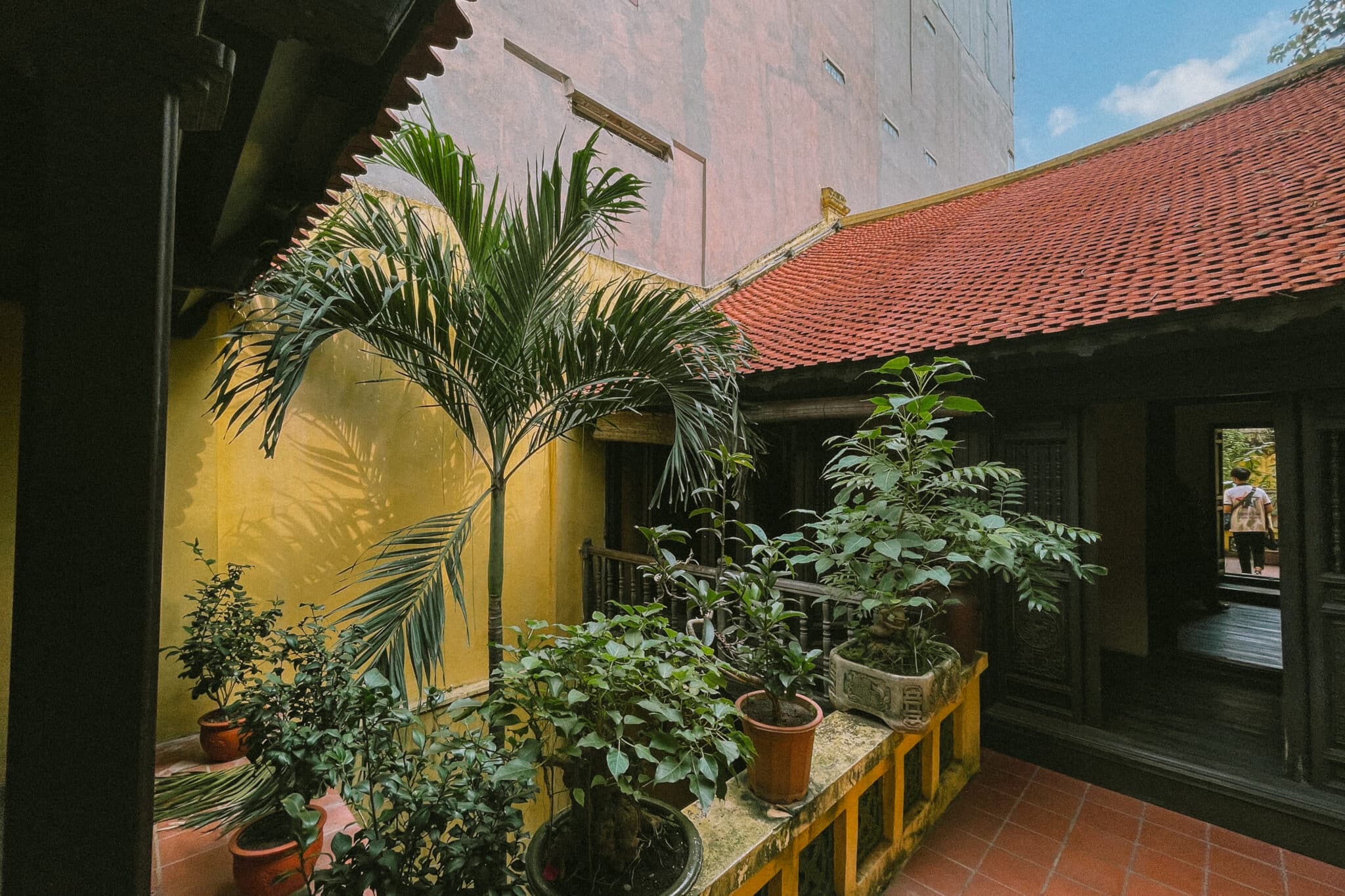
Built in the late 19th century, this restored merchant house shows how families once lived and worked in the same space—shop in the front, living quarters tucked behind.
It’s a classic example of Hanoi’s “tube house” design: narrow from the street, but stretching surprisingly far back, with a small courtyard in the middle to bring in light and air.
What I liked about the Ma May House is that it’s not a big, overwhelming museum—it was small, quiet, and easy to pop into as we were wandering. It wasn’t exactly life-changing, but it did add another layer to the Old Quarter experience.
It was also not particularly crowded, which I seriously appreciated.
6. Visit the Memorial House of Ho Chi Minh
The Memorial House of Ho Chi Minh is another small, easy-to-miss stop that adds a bit of historical texture to a wander through the Old Quarter.
It’s not a major museum or anything you need to build your whole day around, but if you’re already nearby, it’s worth stopping by for a few minutes. The house is connected to Ho Chi Minh’s early revolutionary activity in Hanoi, and like the Ma May Ancient House, it gives you a quieter glimpse into the layers of history tucked behind the Old Quarter’s busy streets.
Honestly, this is exactly the kind of place I love stumbling into while traveling: low-key, not overly polished, and interesting enough to make you feel like you’ve uncovered something just slightly beneath the surface. Unfortunately the upper floors weren’t open when we visited, but I enjoyed having a chance to read up a bit more on Uncle Ho!
6. Keep an Eye Out for the Old City Gate
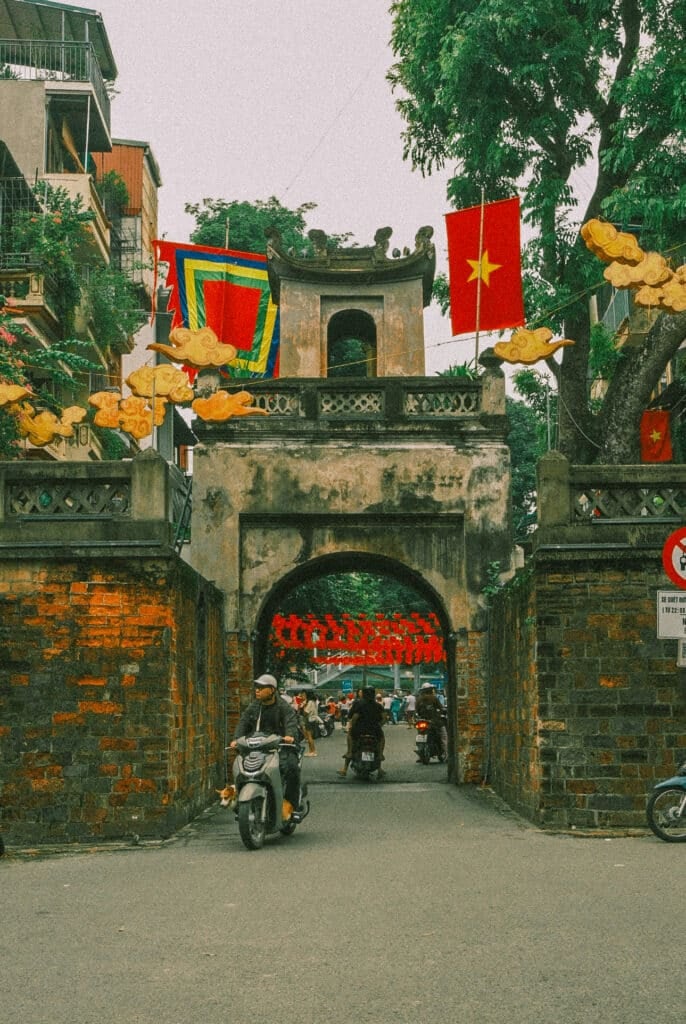
One of the few physical remnants of Hanoi’s old city walls, the Old City Gate is easy to miss if you’re not paying attention—which is lowkey disrespectful, considering it dates back to the 18th century.
It originally served as one of the main gates into the city’s fortified walls, controlling access to the Old Quarter. Today, however, it sits right in the middle of a busy intersection.
The gate is less of a destination and more of an “oh hey, there’s that gate” situation.
My advice would be to plan your day so that you walk by it on your way to other things on this list, as it’s not hugely important to go see on purpose.
Overwhelmed by all there is to see in the Old Quarter?
👉🏽 Hire a private guide for the day! 👈🏽
Look, we all know I’m not a “see every sight” girlie, but sometimes the sheer length of the list can make me anxious anyway. This local-led private walking tour of the Old Quarter will make sure you don’t miss a thing without turning your afternoon into a checklist.
7. Take a Break at Bach Ma Temple
Bach Ma Temple is one of Hanoi’s oldest temples—and one of those places you could easily walk past without realizing what it is (Hanoi is so packed that this frankly happens a lot).
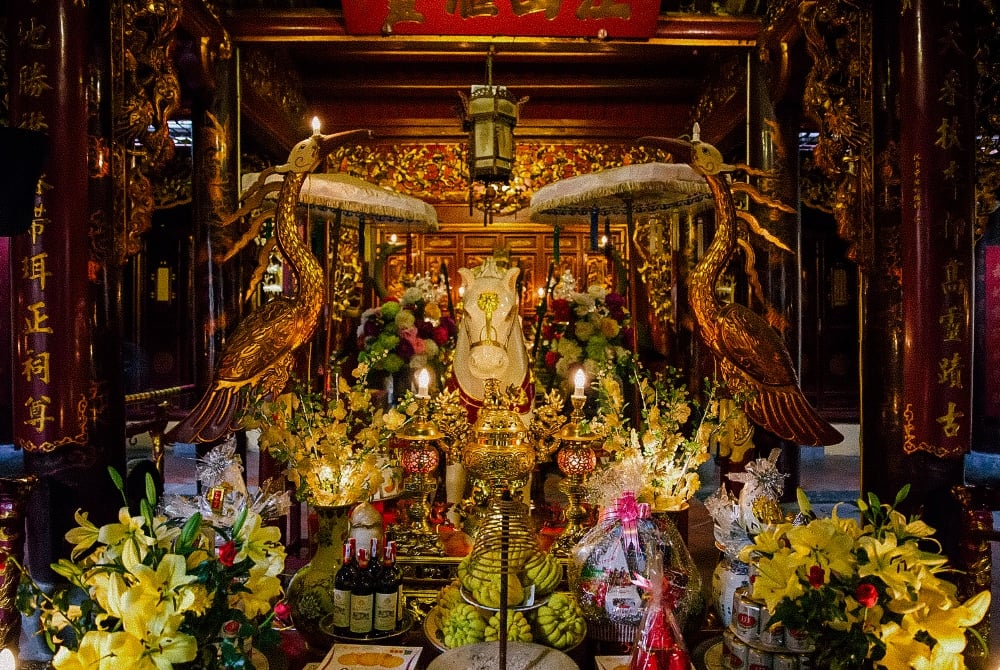
Originally built in the 11th century, it’s dedicated to the “White Horse” spirit, which, according to legend, helped guide the construction of Hanoi’s ancient citadel. Inside, it’s a lovely and calm contrast to the streets outside. Like many Vietnamese worship sites you’ll find incense, red lacquered wood, and a steady flow of locals stopping in to pray.
It’s not a huge place, but it’s worth stepping inside for a few minutes, especially if you want a break from the noise and a glimpse into the spiritual traditions of Hanoi’s Old Quarter.
8. Step Into the Chaos at Dong Xuan Market
If you want a glimpse of actual everyday Hanoi, head to Dong Xuan Market.
It’s the city’s largest indoor market, set inside a slightly brutalist, Soviet-era building right on the edge of the Old Quarter—and it’s about as no-frills as it gets.
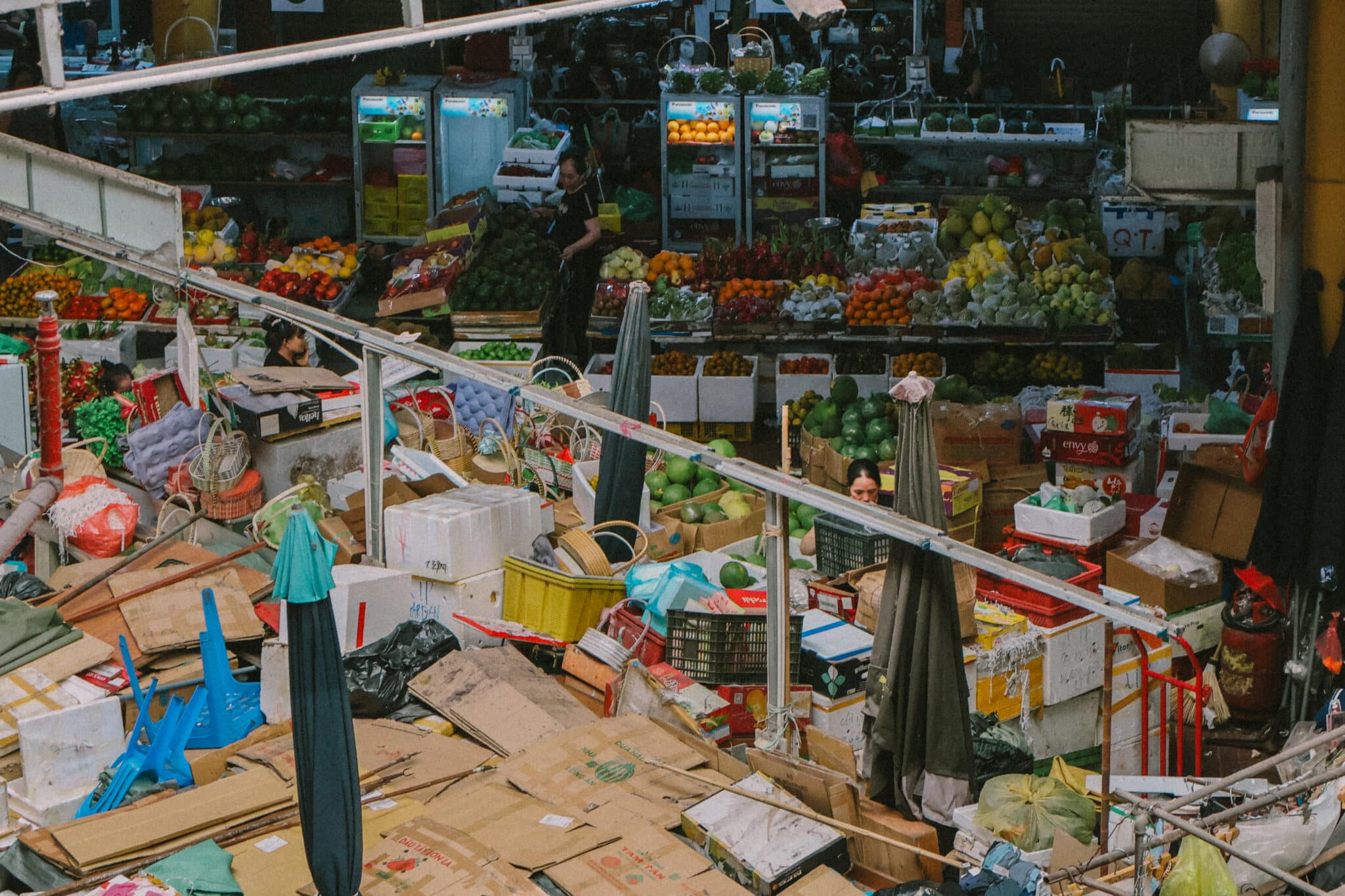
Downstairs is a proper wet market (closed-toe shoes highly recommended), while upstairs turns into a maze of wholesale everything: printed t-shirts, fabrics, school uniforms, luggage, and plenty of “what even is this?” type items.
Basically, I like to visit markets for the experience a lot of the time, and if I find something I want/need, it’s just an added bonus. That said, it’s surprisingly easy to walk out with something you absolutely didn’t plan on buying (often a bagged local spice mix in my case)!
Make Your Wet Market Experience Even More Authentic
👉🏽 Take a cooking class with market visit! 👈🏽
Instead of just visiting for a walk through the market, take the chance to go deeper. In this half-day cooking class (with almost 1000 5-star reviews on GYG!), you’ll choose your own produce and sample new products at the market, before going back to the teaching kitchen to whip up a 5-course meal of local dishes.
9. Take a Detour to Phung Hung Mural Street
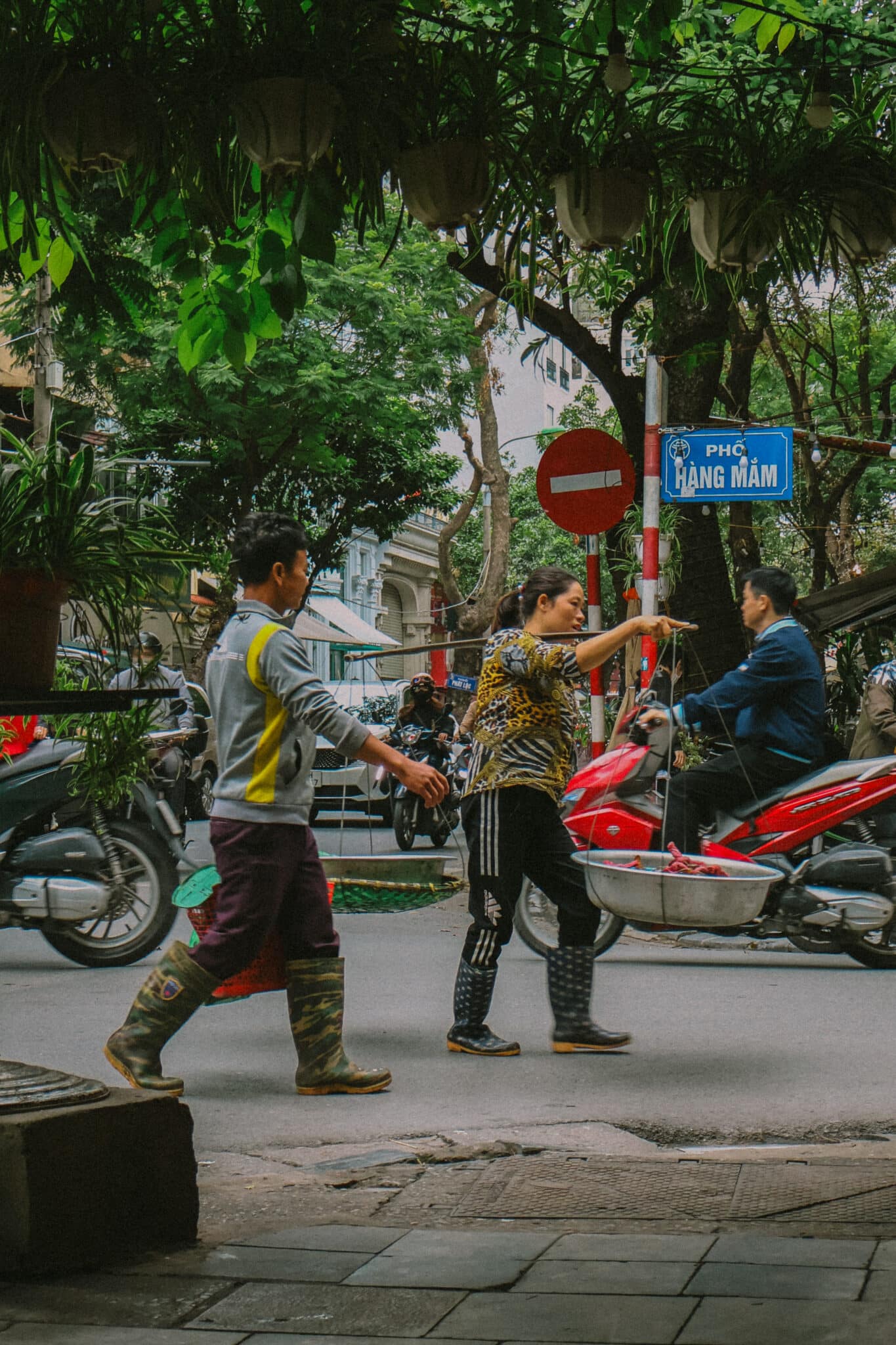
Slightly hidden under the railway arches, the Phung Hung Mural Street is a small but mighty detour from the usual Hanoi Old Quarter chaos.
The murals here depict scenes from Hanoi’s past—street vendors, old storefronts, everyday life—painted onto the arches in a way that blends history with a slightly more modern, curated feel. It actually kind of reminded me of the street art in Singapore.
I wouldn’t bend over backwards to try to see it, but I do appreciate a moment of street art to get a vibe of the area.

10. See a Water Puppet Show
Taking in a show at the Thang Long Water Puppet Theatre near Hoan Kiem Lake is honestly not something I was jumping to do, but it is one of the more unique cultural experiences in Hanoi, which makes it worthy of being on this list, and also potentially worthy of your time.
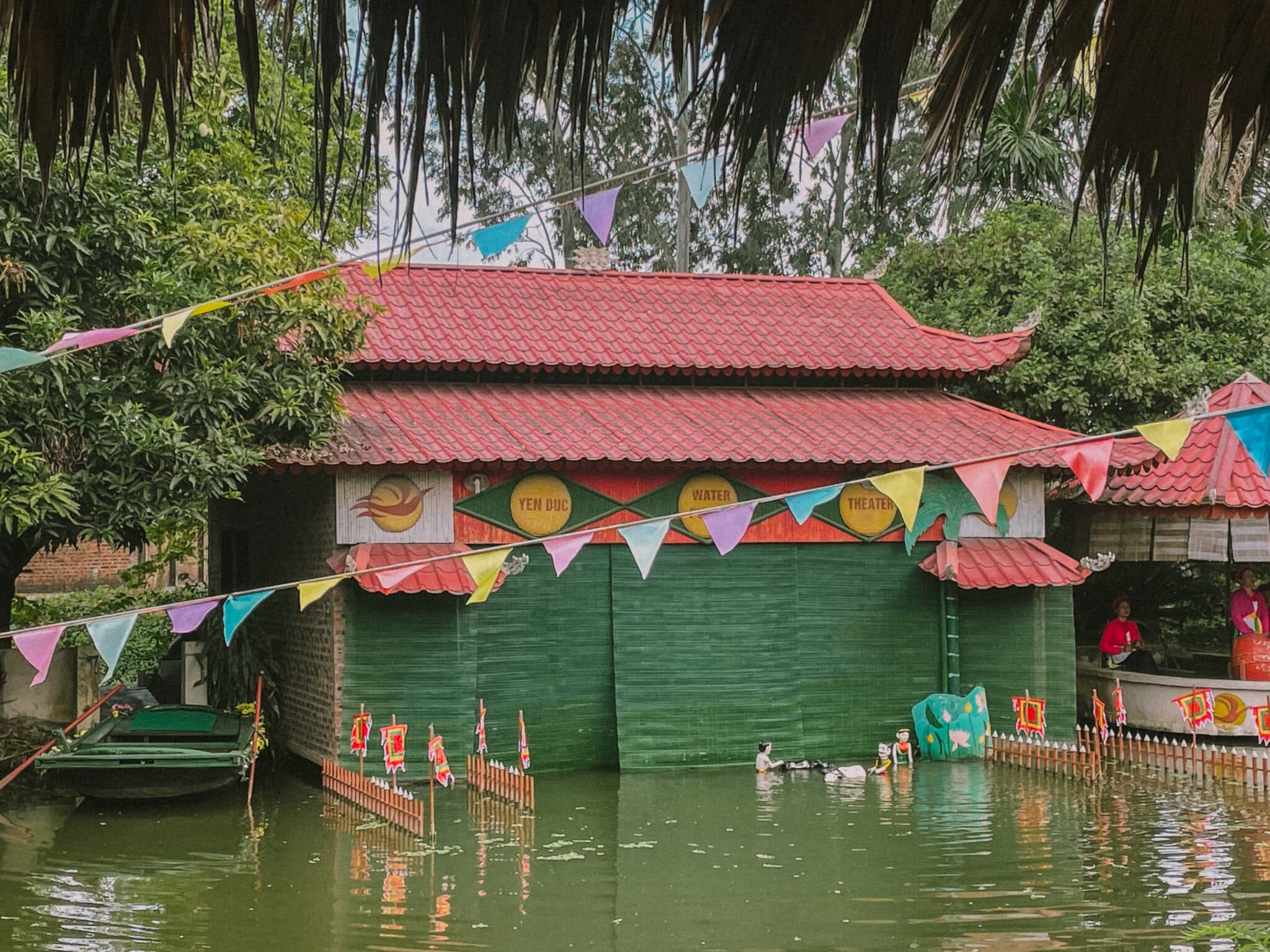
Water puppetry dates back centuries and was traditionally performed in flooded rice fields, which… explains why the stage is a pool of water. And honestly, it’s pretty cool and impressive. It just also happens to feel like I’m back at a children’s show with my babysitter. The shows combine puppetry, live music, and Vietnamese folklore.
It’s a bit of a tourist staple, but for good reason—and an easy add if you’re looking for something structured to balance out all the wandering.
Insider Tip
Sometimes if you book a guide or tour to somewhere near Hanoi (like Ha Long Bay), you may end up getting a stop to a puppet show regardless of if you wanted one. This happened to us after our trip to Ha Long Bay which was convenient! (Albeit also painful as I had a migraine and wanted to go home lol).
Despite my above tip, I actually think there is one huge benefit to visiting the Thang Long Water Puppet Theatre in Hanoi: audio description is available in a variety of languages. Yes, this costs 50,000 VND (1.50 GBP or 2 USD) at the door, but it will be incredibly useful.
We were actually so deeply confused during our countryside water puppet show, since the narration was only offered in Vietnamese. While we had fun guessing at what was happening, I also think I would have found it more engaging with the audio guide they offer in Hanoi.
Book Your Water Puppet Show in Advance
As one of the most popular activities in Hanoi, each of the five daily shows at Thang Long Puppet Theatre is a hot ticket. Standard seats (the cheapest option) sell out around a month in advance. You can usually find Deluxe or VIP tickets until right before each show, but if you’re looking to save money then book early.
11. Check Out the Gimmicky (But Fun!) Train Street
One of Hanoi’s more iconic sights, Hanoi Train Street is exactly what it sounds like—a narrow residential street where a train passes straight through, just inches from people’s homes and businesses. If you’ve done even 2 minutes worth of Hanoi research, you’ve almost definitely come across it.
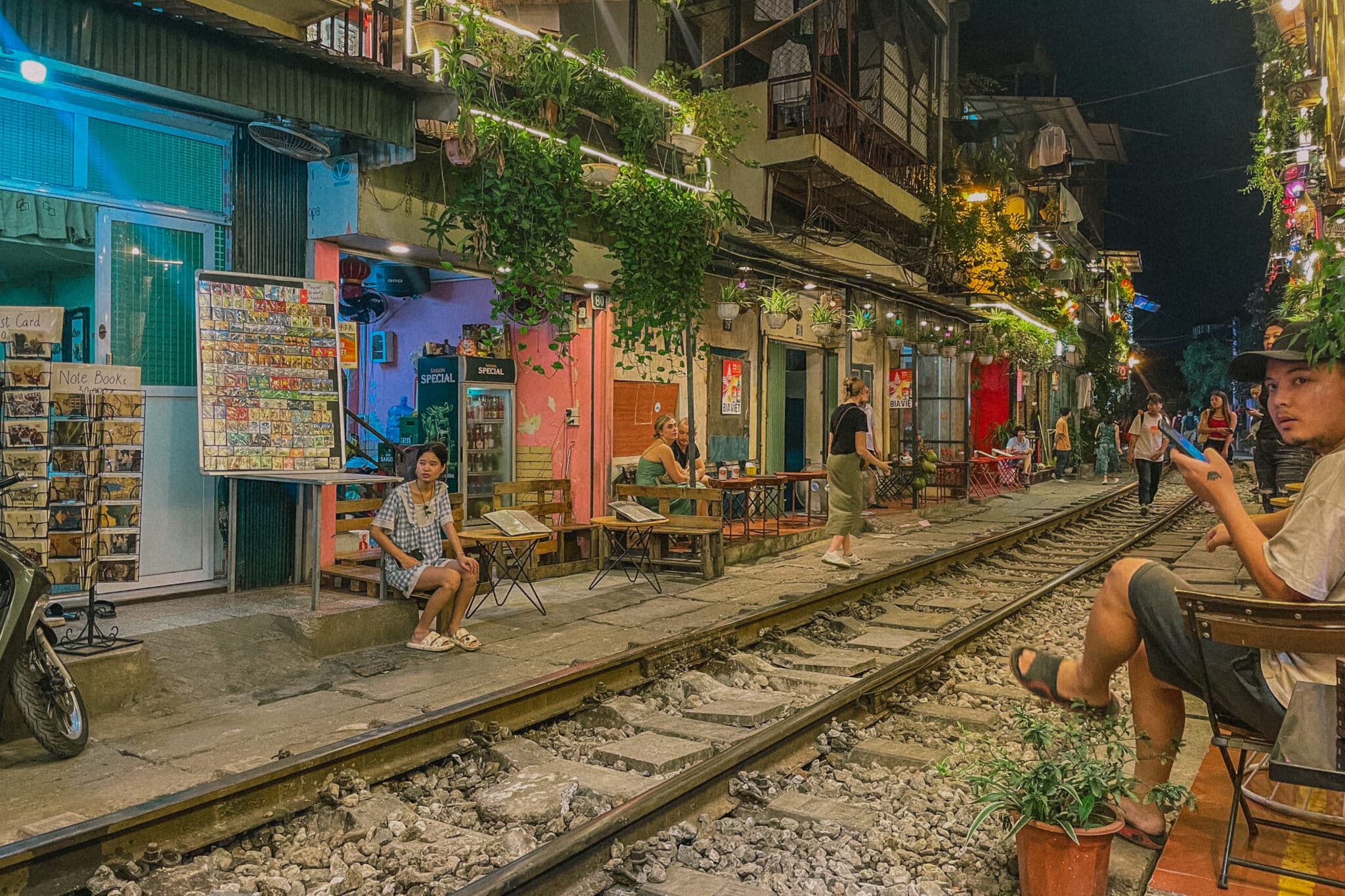
Access is no longer the free-for-all it once was, and we found it easy enough to visit with locals keeping things nice and orderly!
Your best bet is usually to go to one of the cafes lining the tracks where you can sit and wait for a train to come through. It’s undeniably touristy and gimmicky, but I was also kind of shocked by how fun it was.
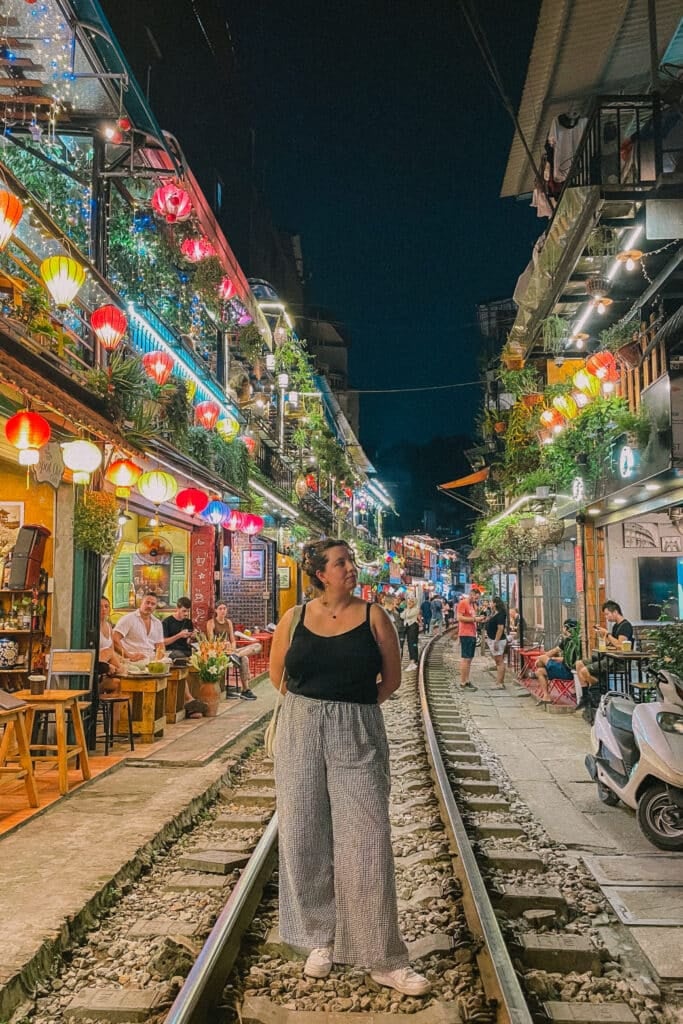
We went on a random evening, one of our last in Hanoi, and were able to snap some sweaty photos on the tracks before finding a cafe. I’m not really one for getting the super special iconic Instagram shot, but a lot of girls were out there serving, so don’t be afraid to do your full photoshoot if that’s your vibe!
I was also super surprised by how easy it was to find a cafe to sit at to watch the main event. There were tons of seat options available, and no one was aggressively asking us to choose their cafe, which is always a win.
Insider Tip
Time this stop well! There will likely be locals (perhaps affiliated with the bars on the street? We weren’t positive…) at the entrance to the street letting you know if/when to expect the next train.
If you can time your visit to be like, 15-30 minutes before the train comes, that will give you a good amount of time to take some photos, find a good spot to sit, and order a drink or snack before the big event, which lasts all of 30 seconds.
12. Go to the Night Market for the Vibe
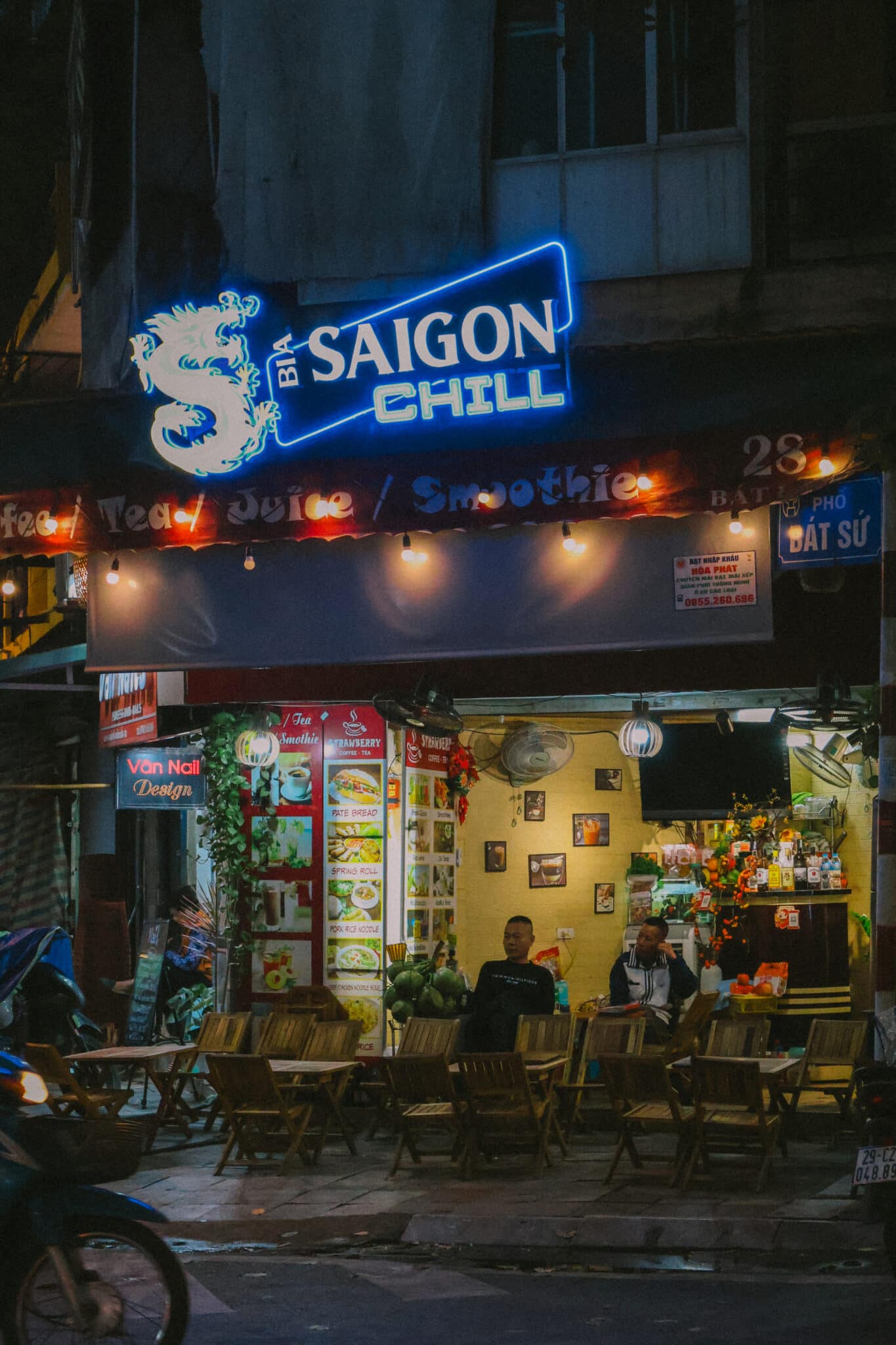
If you’re in the Hanoi Old Quarter on a weekend, the Hanoi Night Market is worth a wander.
Running weekly, Friday through Sunday, the market covers a few central streets and turns the area into a busy pedestrian zone filled with stalls selling everything from clothes and souvenirs to street food.
I recommend coming for the plethora of street food because, to be honest, it’s a lot of the usual souvenir crap.
Beyond dinner, the real reason to come to the night market is the atmosphere and people watching. If you happen to be there during a holiday or festival you might catch a performance if you’re lucky.
13. Experience Beer Street (If That’s Your Scene)
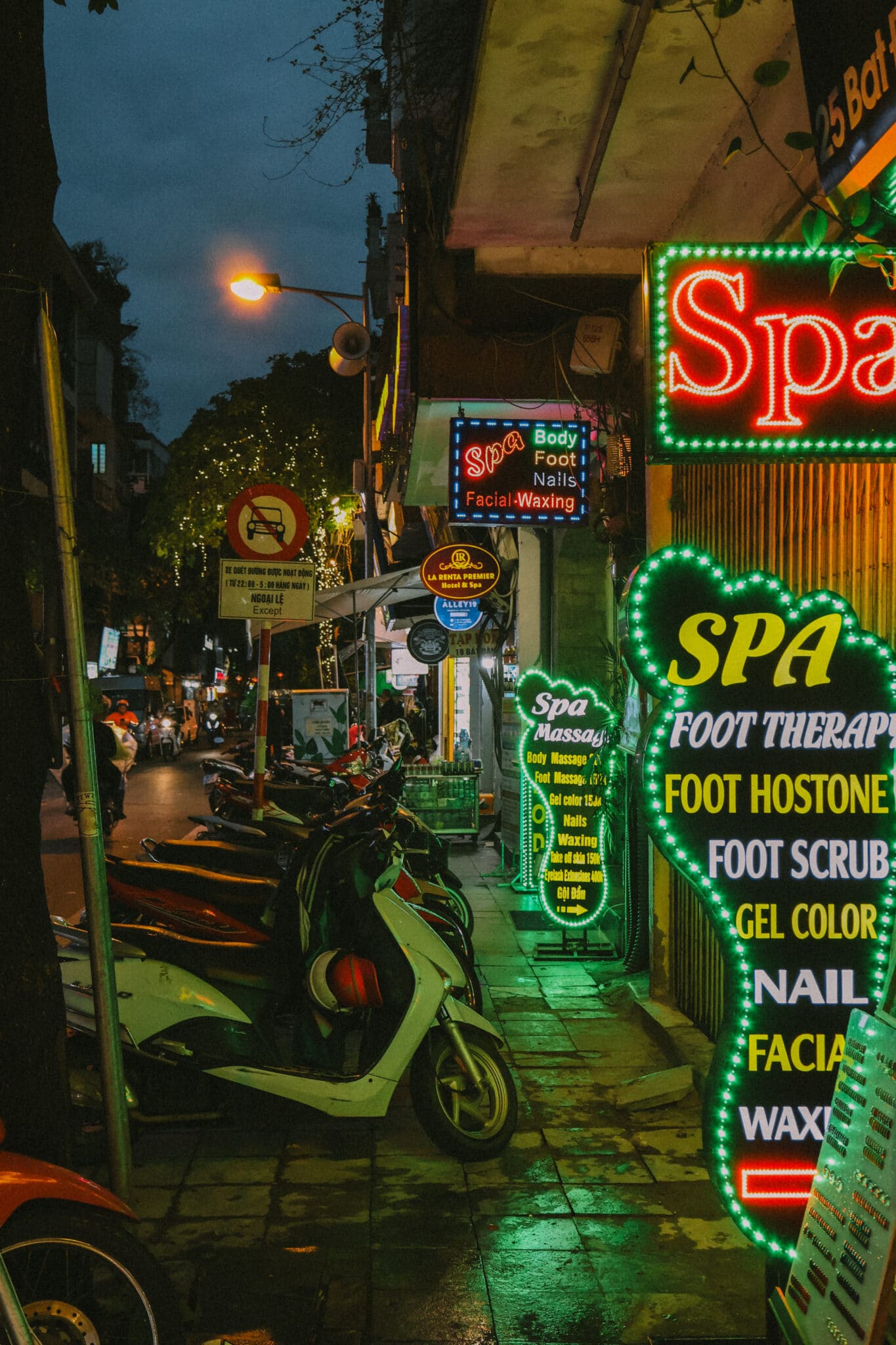
If you’re looking for nightlife in Hanoi, you’ll inevitably end up hearing about Ta Hien Street, better known as “Beer Street.”
This is where Hanoi’s Old Quarter energy shifts to party-mode after dark. People spill out onto the street, bars fill up quickly, and the whole area turns into a dense, shoulder-to-shoulder crowd of travelers drinking cheap beer late into the night.
If you’ve spent any time on this blog or know me at all you’ll know this couldn’t be further from the type of energy I personally want to engage with.
But, it’s a cliche because it’s a classic! It’s not particularly subtle, and it’s definitely one of the more tourist-heavy parts of the Hanoi Old Quarter—but that’s also kind of the point. If the whole concept didn’t make me anxious I probably would have at least gone for the bit.
Personally, it just isn’t really my scene, but if you’re in the mood for something loud, social, and very easy to drop into, this is where you’ll find it.
Where to Eat in Hanoi’s Old Quarter
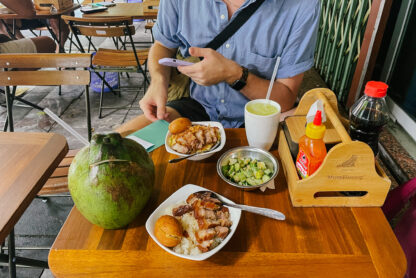
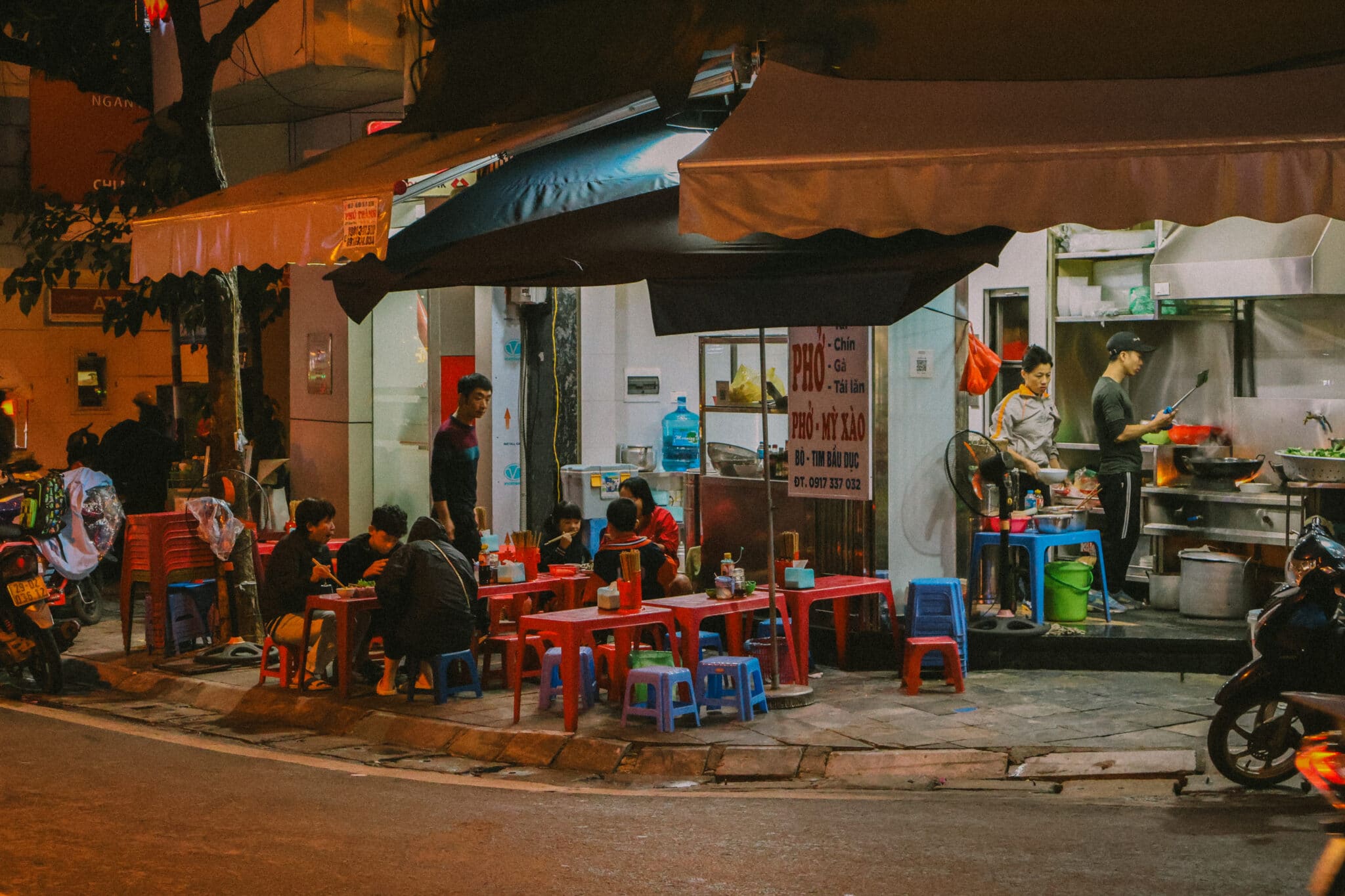
One of my absolute favorite things about The Old Quarter was just how much incredible food is packed into this area. And unlike a more built up and trendy area, it’s mostly hole in the wall restaurants and local stalls. You barely have to wander more than a block to find something worth sitting down for.
Where to Stay in Hanoi’s Old Quarter
Staying in Hanoi’s Old Quarter puts you right in the middle of the action—think street food on your doorstep, chaotic charm, and walkable access to most of the city’s highlights. It’s where we stayed, and despite my initial apprehension about staying in a touristy area, we actually found it to be the perfect home base for our visit.
Below are a couple of my favorite Old Quarter stays, but if you want a broader breakdown of neighborhoods, budgets, and the best options across the city, make sure to check out my full Hanoi hotels guide.
RACHEL IRL FAVE
$$$ | Old Quarter | 5 Stars
Set back in a peaceful courtyard in Hanoi’s Old Quarter, Peridot Grand Luxury Boutique Hotel is one I can recommend from experience. We stayed here ourselves on two occasions, and it completely reset our expectations of boutique luxury in Hanoi. From the moment you step into the lobby—gleaming marble floors, dramatic chandeliers, intricate tilework—you feel not only wrapped in quiet glamour but taken care of by the five-star service and attention. Even the standard rooms are remarkably spacious, layered with rich woods, plush textiles, and pillows I wish I could have smuggled home. The rooftop bar and pool area is where the magic lingers, though: a shimmering pool, skyline views, and espresso martinis at golden hour were some of our favorite bits of our whole trip. If you’re looking for design-forward luxury in Hanoi where you can feel both pampered and perfectly positioned, I can’t recommend this hotel highly enough.
CHECK RATES & AVAILABILITY FOR YOUR DATES
Photo: Booking.com
RACHEL IRL FAVE
$$ | Old Quarter | 5 Stars
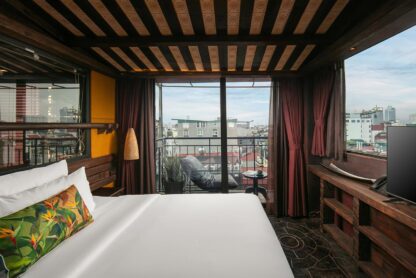
Kecho Legacy Hotel leans fully into boutique drama — carved wood details, lantern lighting, and rooms that feel inspired by old Hanoi rather than copied from a template. Recent guests agree that suites with wraparound windows are the move, giving you sweeping city views and all-day natural light. They also rave about the rooftop bar (multi-level and cocktail-worthy), the genuinely excellent spa, and standout service. Step outside and you’re straight into the Old Quarter buzz, but expect to return home each evening to warm, intimate, and atmospheric. If you want character with polish, this is one to shortlist.
CHECK RATES & AVAILABILITY FOR YOUR DATES
Photo: Booking.com
RACHEL IRL FAVE
$ | Old Quarter | 4 Stars
Casa Dos Príncipes leans into a moodier, more tailored aesthetic — deep-toned wall paneling, curated ceramics, brushed brass accents, and a subtle Indochine-meets–Art Deco sensibility that feels intimate and quietly sophisticated. For the value, it’s one of the most grown-up stays you’ll find in the Hanoi Old Quarter. Guests consistently rave about the genuinely attentive staff, the peaceful side street location, and the impressive soundproofing that lets you sleep “like a baby” despite the city’s buzz. Just a short stroll to Hoan Kiem Lake, it delivers polish, personality, and heartfelt service in equal measure.
CHECK RATES & AVAILABILITY FOR YOUR DATES
Photo: Booking.com
FAQs about Hanoi’s Old Quarter
What is the Hanoi Old Quarter famous for?
The Hanoi Old Quarter is probably the most well known neighborhood in Hanoi.
It’s well known as the cultural and historic center of the city. One of the most recognizable features is its 36 “guild” streets. Historically, each one specialized in a specific trade (bamboo, metal, jewelry etc.). Today, however, it’s known for much more, including nightlife, restaurants, and shops.
Notable Highlights:
36 Guild Streets: Historically, most street names start with “Hang” (which basically means goods or merchandise), followed by whatever was traditionally sold there—like Hang Bac for silver or Hang Gai for silk. This was one of the most fun parts of the Old Quarter for me.
Street Food & Coffee: Known for its street food scene and tucked-away cafes—some of which serve Hanoi’s famous (and slightly divisive) egg coffee.
Unique Architecture: Keep an eye out for the classic “tube houses”—narrow at the front but stretching surprisingly far back, originally designed that way to keep taxes on street frontage low.
Key Landmarks: Dong Xuan Market, St. Joseph’s Cathedral, and Ngoc Son Temple and more.
Nightlife: At night, parts of the Old Quarter shift into full-on nightlife mode, with the weekend night market and the beer street area drawing big, high-energy crowds.
Cultural Experience: The Old Quarter is history that feels alive and you can get a glimpse of a different Hanoi.
Is Hanoi Old Quarter worth visiting?
Yes – Hanoi’s Old Quarter is absolutely worth visiting, and in fact I would even recommend staying here. It has a ton of amazing cultural significance, and you’ll find endless spots to eat, drink and shop all in a close radius.
Planning Cheat Sheet: Every Link You Need in One Place
P.S. When you book using my links, you help support Rachel IRL at no extra cost to you. It’s a win-win!
Are you ready to explore Hanoi’s Old Quarter?
I hope that this post about Hanoi’s Old Quarter has been helpful in planning your trip to Hanoi! As I said before, the Old Quarter is literally teeming with energy and life that, in my opinion, is well worth the hype.
Plus, if you’ve been around here much before, you’ll know how much my perfect city exploration day revolves around one big activity (like a museum!), a little (window) shopping, and a nice relaxing coffee/snack break. As you can see, the Old Quarter contains spots do the trick for every part of the formula!!
If you have any feedback or want to share your experience with Hanoi’s Old Quarter, please leave me a comment!
As always you can always find me on Instagram (tag me in your travel content!), Youtube, or Pinterest.
Happy traveling!
Downloadable
Google Maps
Save time and explore like a local with my curated Google Maps. Get all my best recommendations, hidden gems, and tips in one easy-to-use guide—no note-taking required!

Liked this post? Pin it for later!